This plant at Exotenherz
Check the shop offer for current availability, price and what is included.
Check the selected shop offer for price, availability and delivery contents.
Your care table
| Topic | What to do | Why it helps |
|---|---|---|
| Arrival | Remove wrap, check root moisture/outlet. | Small pot may still sufficiently moist. |
| Light | Bright filtered daylight, increase slowly. | Young leaves need light not abrupt sun change. |
| Water | Let upper earth dry somewhat then thoroughly water. | Roots need moisture followed by air. |
| Drainage | Let drip, remove cover’s water. | Wet reserve keeps the rootball saturated too long. |
| Roots | Airy soil, slightly larger spring if full. | Unused soil dries slowly. |
| Nutrients | Moderate labelled feed with new growth. | Heavy supply forces neither colour/healthy growth. |
| Leaves | Dust, inspect underside, let rolls unfold. | Central crown needs gentle handling not constant cuts. |
| Winter | Bright warm, supply by demand. | Lower light slows growth/drying. |
Check the compost and pot weight. The care table explains how far the compost may dry.
Water only when needed. The water should reach the root ball without spilling over the rim.
Remove surplus water from the saucer or cachepot. Then return the plant to a suitable position.
Orange here is leaf age
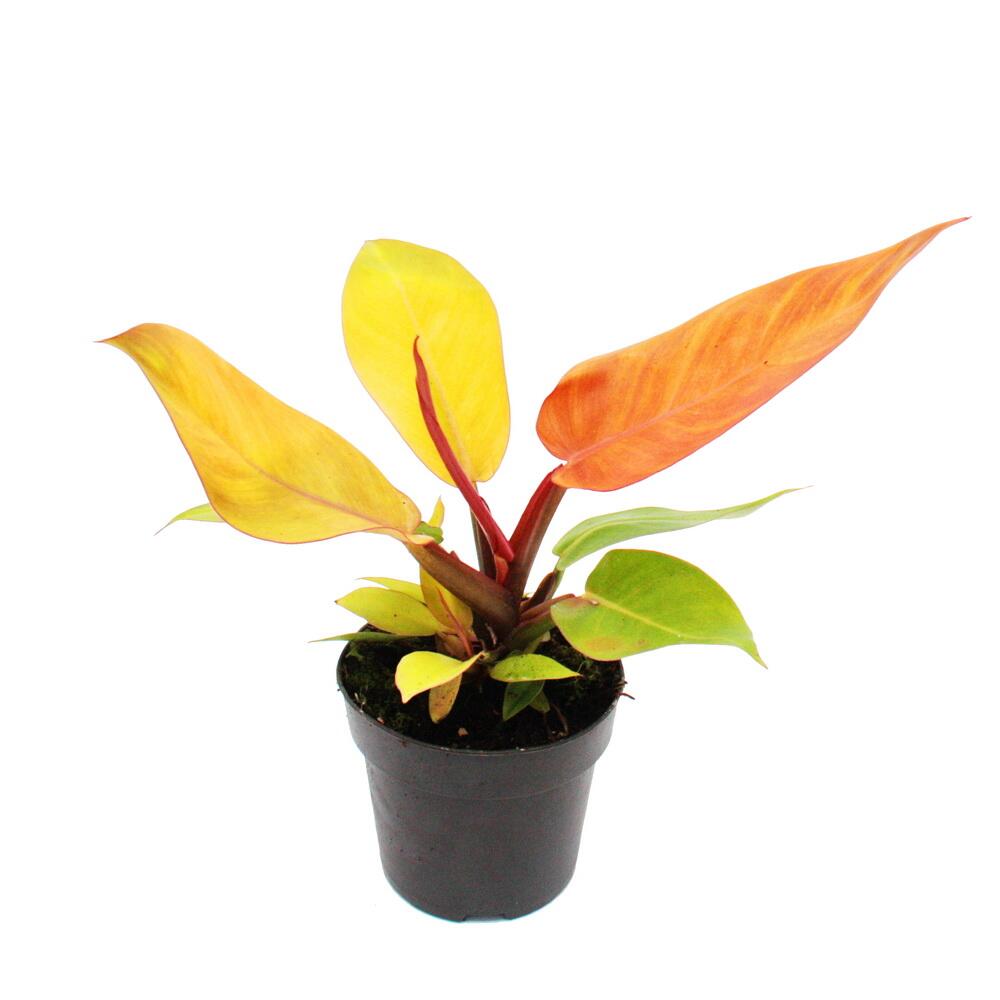
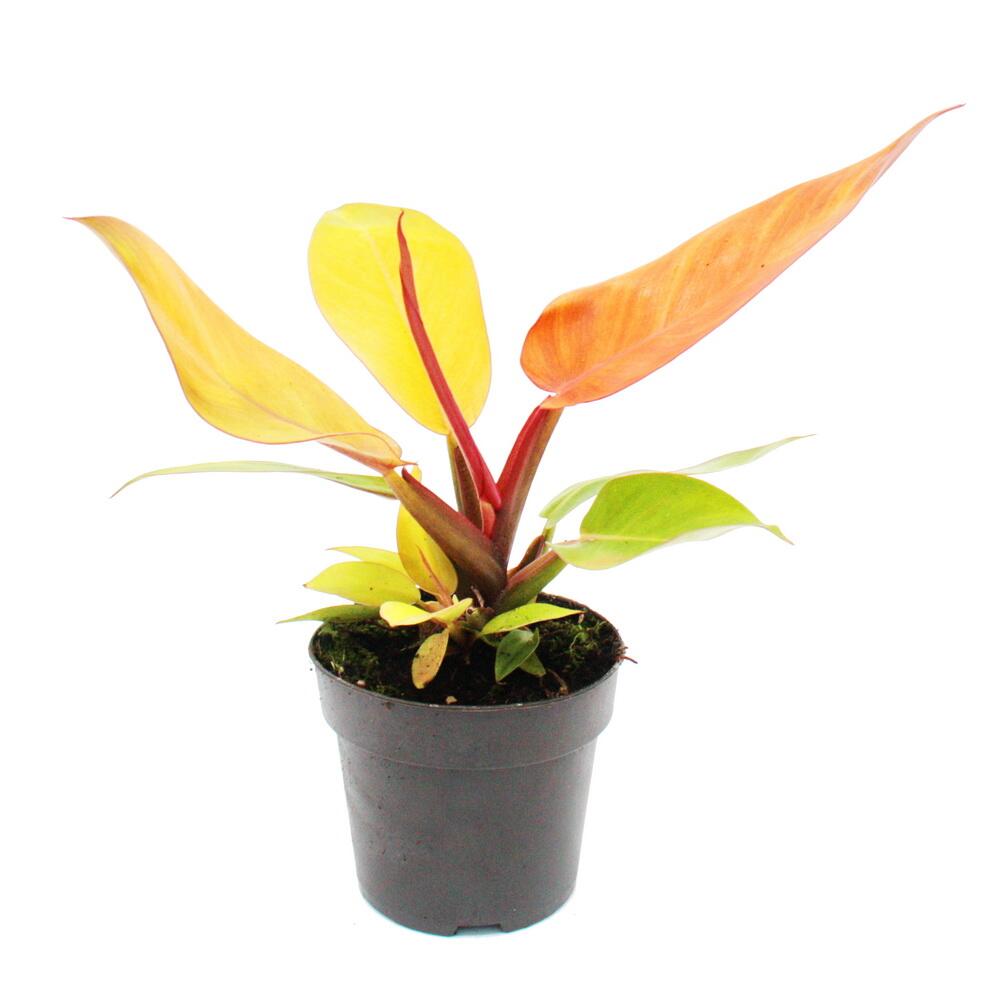
Originals few large leaves over small dark pot. One copper-orange, two yellow, older green below. Red stalks hold colours together. Smooth pointed leaves undivided, fine veins crossing broad area. Prince of Orange named horticultural Philodendron cultivar. New growth changes with ripening toward dark green; crown cannot stay entirely orange. Simultaneous stages interesting on bright desk: see new leaf arrive and older fade to background.
Meet little pot on arrival
Offer 12 cm pot about 25–30 cm total including pot. Young size good start free table. Gently unwrap holding pot not leaf stalks. Check moisture, drainage and leaves pressed in transport. Moist roots need no precautionary water. Leave growth quiet, observe apart from crowded collection. Functioning pot/roomy roots need no immediate repot. Photo records young crown for book.
Upright crown needs width
Upright structure not long vines of many philodendrons. Tall moss pole usually unnecessary. Allow side room so tips do not rub wall or constantly touch during work. Good conditions later 0.5–1 m high/wide guidance, no quick exact-size promise. Initially narrow site may become tight. Stable vessel for broader crown. Scene little pot is young stage; mature solitary specimen later life phase.
Support brightness, let colours develop
Bright filtered daylight best. Beside lit window may beat hot glass. After shipping/moving increase stronger light gradually. Hot direct sun harms pale young leaves; deep dark shelf slows new growth. Even warmth away cold draught/heater air. Spring reassess sun path: protected winter place may suddenly gain intense afternoon. Leaf age/stage influence change. Strong sun/extra feed cannot reliably hold ripening leaf’s first orange. Firm healthy leaves/new growth decisive.
Air between waterings
Check upper soil and pot weight. After light drying supply evenly/thoroughly then drain completely. Empty saucer/cover. Roots moist without constantly saturated soil. Room-temperature water avoids cold; suitable low-lime water may help in hard-water regions. The small rootball dries differently in a bright, warm place than cool winter. No fixed weekday water. Limp leaves/already wet soil first outlet/root checks, extra sip not solution.
Roots and season together
Loose humus houseplant mix with coarse structure holds moisture/root air. Dense ball spring opportunity slightly bigger holed pot, crown same height. Extra unrooted soil holds water too long. Moderate labelled feed in visible growth, count pre-fed mix. Dark winter often lower demand, adjust water/feed by activity, keep bright warm. Dry air at leaf not necessarily dry ball, inspect separately before changes.
Observe crown without pulling
Rolled young leaf opens itself, no finger-pulling soft tip. Mature leaves gently dust damp soft cloth supported below. No regular shaping, dead foliage with clean tools. Propagation needs suitable shoot with viable bud, single severed leaf not complete crown. Spotted/weak growth inspect undersides/joins for scale/mealybugs/thrips/webs. Light/root water/temp part of causes. Do not eat, shield chewing pets/children, gloves from irritating sap.
One plant, several views

Good to know
Why orange leaf turns green?
Ripening changes colour; yellow/copper growth and older dark green coexist.
Need pole?
Usually not upright compact habit; side space/stable vessel matter more.
Stays30 cm?
25–30 incl.pot young delivery; later good conditions0.5–1 m high/wide guidance.
When water?
After upper soil lightly dries, check roots/water thoroughly/drain. Room/season change need.
Open rolled leaf?
No, unfolds itself. Check warmth/light/water if stalled.
Repot every spring?
Only need, e.g.dense roots. Slight bigger draining pot better than huge.
Edible?
No, away chewing animals/small children; sap irritating.
Sources and editorial note
- Exotenherz: article/GTIN/availability/full delivery (04.10.2026)
- RHS: accepted cultivar/colour/upright growth/later size (direct04.10.2026)
- RHS: philodendron roots/soil/seasons (direct04.10.2026)
- UF/IFAS: hybrid philodendrons/Prince of Orange (direct04.10.2026)
- NC State: genus/upright forms/problems/calcium oxalate (direct04.10.2026)
- University of Minnesota: seasonal light/leaf care/needed repot (direct04.10.2026)
SKU209519112021GTIN4019515917839InStock exact04.10.2026shop checked. Whole short/long and two clean originals read/viewed. Direct RHS cultivar/university care sources04.10.2026. Upright horticultural cultivar, no extra species/parentage claims. Delivery/later size distinguished; shared/public acceptance separate.