This plant at Exotenherz
Check the shop offer for current availability, price and what is included.
Product and delivery details are given in the individual offer.
Your care table
| Topic | What to do | Why it helps |
|---|---|---|
| Position | Hang in bright indirect daylight protected from hot window sun. | Enough light keeps fine shoots denser; intense sun can stress small foliage. |
| Watering | After top soil dries, check ball and pot weight, then water evenly. | The small pot must neither dry completely for long nor remain constantly wet. |
| Drainage | Take the basket down to water, drain and remove residual water. | Excess hidden in a decorative container keeps roots too wet. |
| Room climate | Keep warm without cold draughts or direct heating air. | Delicate thin leaves appreciate somewhat higher air humidity and a calm place. |
| Compost and pot | Use loose peat-free houseplant compost and pot only slightly larger when roots are crowded. | A suitable amount stays better aerated than an oversized wet pot. |
| Feeding | Feed moderately during active growth according to suitable liquid fertiliser label. | Pre-fed compost and slower winter development reduce additional demand. |
| Shoot care | During growth gently shorten individual long bare tips where needed. | Targeted corrections encourage density without removing the whole cushion. |
| Checks | Regularly inspect undersides, shoot nodes and moist plant centre. | Pests or soft dead shoots appear early before dense leaves hide larger problems. |
Check the compost and pot weight. The care table explains how far the compost may dry.
Water only when needed. The water should reach the root ball without spilling over the rim.
Remove surplus water from the saucer or cachepot. Then return the plant to a suitable position.
A silvery cushion grows over the rim
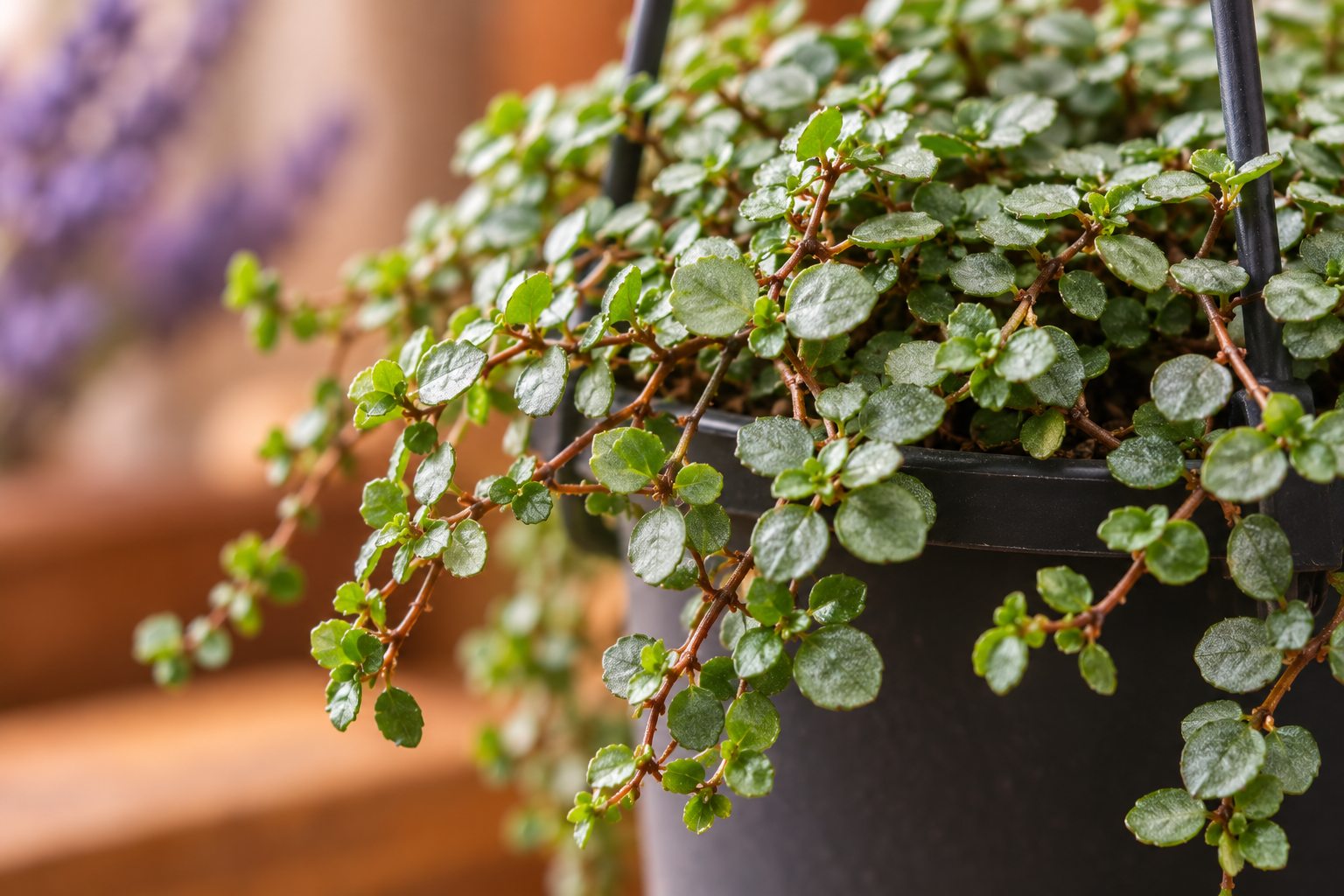
Close up Glauca looks like a small mesh. Many tiny rounded leaves sit on thin red-brown shoots which branch and drape over the pot edge. Their silvery-green surface looks cooler or slightly greener in soft daylight. The original shows a compact dense beginning with individual longer runners. It is neither a huge curtain nor a rigid spherical bush. Loose tips provide its charm. From a bright hanging place you can follow its structure from below. Leave fine shoots free rather than trapping them behind furniture or drawing them through a tight support.
Glauca remains an understandable trade name
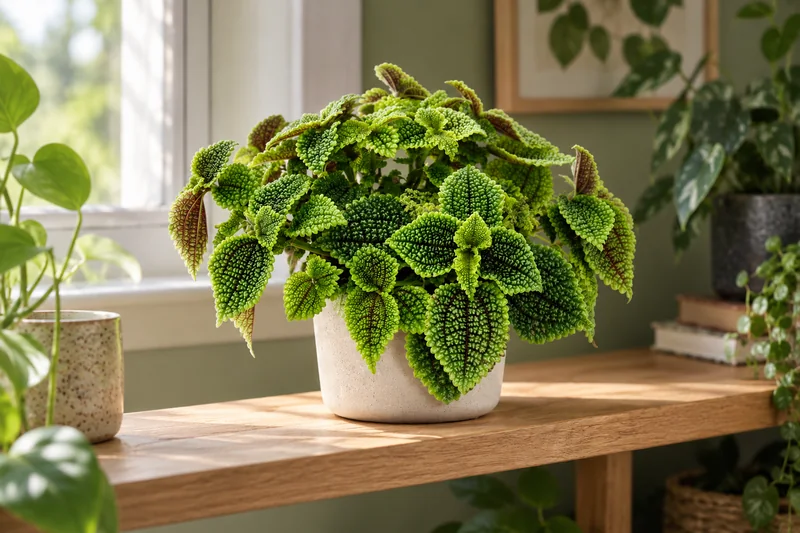
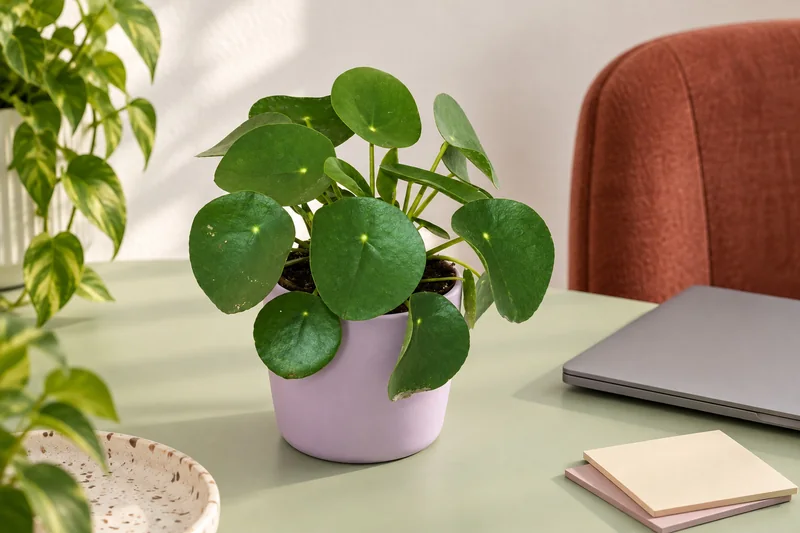
The offered plant is called Pilea glauca, in German Blaue Kanonierblume. Glauca is used here as a trade name; a definitive botanical species assignment is not secure for this offer. RHS describes a similar silver-leaved trailing Pilea as glaucophylla. That designation is also classified differently botanically. The clear practical starting point remains documented foliage: tiny silvery-green leaves on fine reddish shoots. Pilea belongs to the nettle family and includes very differently looking houseplants. Pilea peperomioides has large coin leaves and Moon Valley coarsely convex foliage. Fine structure and hanging cultivation matter for Glauca.
Unpack the small basket gently
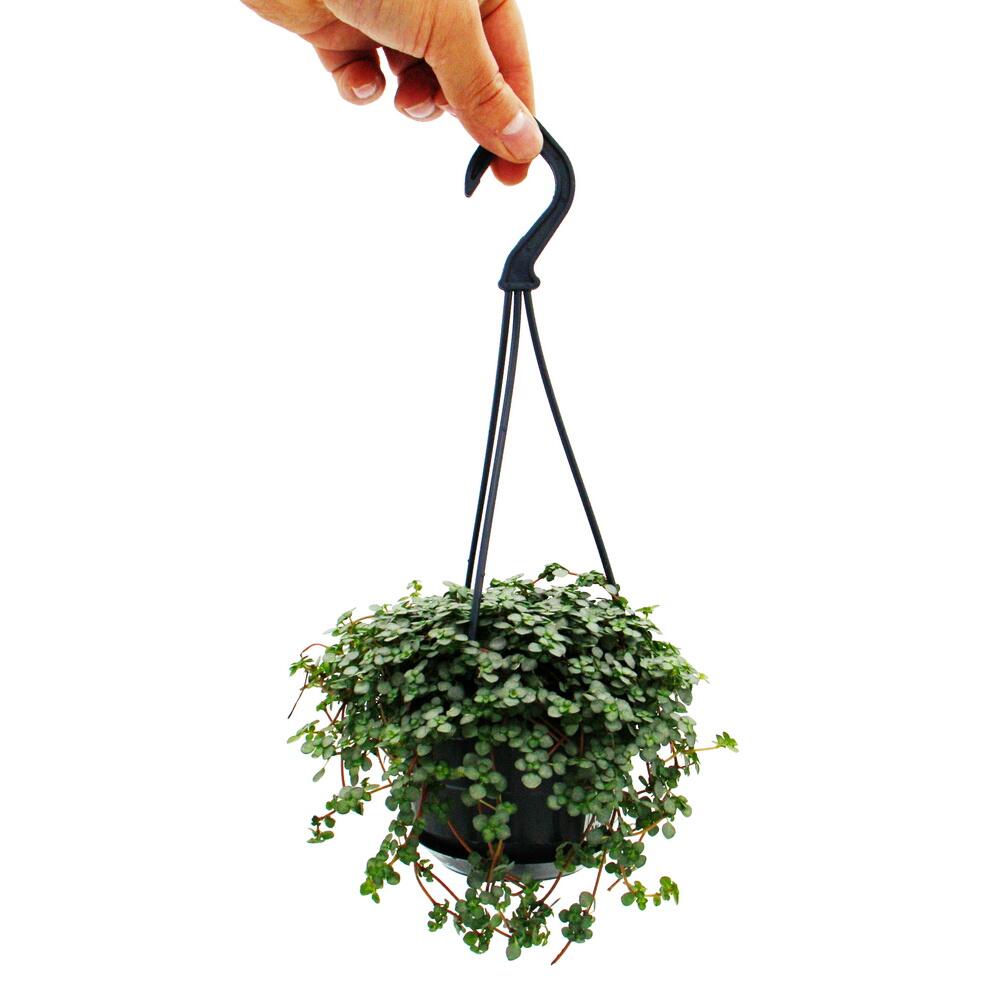
The own short description gives a twelve-centimetre hanging pot. No specific plant height or shoot length is stated. The long hanger in the photograph is not a plant measurement. Hold the basket by its container or stable hanger while gently releasing packaging from foliage. Trailing tips must not get under the pot bottom. Afterwards check compost and drainage. A still-moist plant does not automatically need more water after transport. Extra supports and room decoration in the styled scene are examples. The existing growing pot can initially stay while roots have enough space.
A hanging plant also needs accessible light
A bright place near a suitable window lets small leaves grow well. Indirect daylight suits it better than hot unfiltered summer sun behind glass. Do not hang so high that foliage sits in dark room space above the window edge. A thick curtain can greatly reduce brightness too. A side-lit place at eye level combines light and easy watering access. Cold ventilation air should not blow directly through shoots. Distance from a radiator keeps foliage out of the hottest dry air. A bright bathroom may suit it, but humidity does not replace missing daylight.
Supply the root ball without soaking the centre
When top soil begins drying, also check pot weight and moisture below. Water slowly and evenly where needed. Gently hold the dense cushion aside so water reaches soil rather than constantly sitting between leaves. If possible take the basket down and afterwards drain excess. A hidden decorative-container reserve would be unfavourable. The small ball should neither always be wet nor completely dry out for a long period. In bright warmth it may use water faster than expected. A fixed weekly date reflects these differences poorly.
Accompany branching and try cuttings
When roots genuinely become crowded provide slightly more space and loose peat-free houseplant compost in spring or summer. Support the ball without pulling fine shoots. Moderate suitable feeding during active growth follows the label, considering fresh pre-fed compost. Long thinly leaved tips can be shortened with clean tools where needed. Healthy shoot sections suit a cutting attempt in freely draining compost under warm bright conditions and suitable humidity. A separate dense plant takes time. A cut single leaf does not replace a suitable shoot cutting. Do not heavily shorten and unnecessarily repot the mother simultaneously.
Keep accompanying the small cushion carefully in winter
Glauca remains bright and warm in winter. With less light it often grows more slowly and soil takes longer to dry. Continue checking supply and adapt additional nutrients to actual growth. Thin leaves appreciate somewhat higher humidity; a suitable room or humidifier can help. Brief misting does not permanently create a different climate. In a display case light and air exchange must be right because dense foliage wet for long encourages mould. Gently remove soft dead shoots and inspect leaf undersides for small animals. With yellow or wilted leaves first assess ball, light and airflow together. Fresh healthy tips best show whether conditions suit it again.
One plant, several views
Good to know
How large is the offered basket?
The short description gives a 12 cm hanging pot. Plant height and shoot length are not specifically stated; the hanger does not count as plant height.
Is Glauca a secure botanical species name?
For this offer Glauca is used as a documented trade name. No certain assignment to a particular wild species is inferred.
Are the tiny leaves comparable with Pilea peperomioides?
They are different appearances. Pilea peperomioides has large coin leaves; Glauca many tiny leaves on hanging shoots.
Can it hang high in a dark room?
That would be unfavourable. Upper foliage also needs bright indirect light; a high hook alone offers no suitable position.
When is water needed?
When top soil has dried and checks show a lighter less-moist ball. Supply thoroughly and drain well.
Does it absolutely need a terrarium?
No. A bright warm place with suitable humidity can suffice. In a display case also consider air exchange and mould checks.
Can I cut long bare tips?
Gently shorten during growth if needed. Healthy shoot sections can be cuttings; leave sufficient green foliage on the mother.
Why is dense foliage soft inside?
Check prolonged wet soil and foliage moisture. Remove dead shoots, improve drainage and air exchange, then supply the ball according to need.
Sources and editorial note
- Exotenherz: offer and original photographs (03.10.2026)
- RHS: complete Pilea culture, trailing types, water and propagation (03.10.2026)
- RHS: silver-leaved trailing Pilea type under glaucophylla (03.10.2026)
- Kew POWO: formal glaucophylla name and botanical distinction (03.10.2026)
Shop offer, article number, GTIN, availability and originals checked directly on 03.10.2026. Specialist sources directly read. Documented independent trade name Pilea Glauca, with no certain equivalence to libanensis/multiflora or named cultivar. Root approved conservative trade name. 12 cm pot directly in own short description of selected SKU276320112023-06; no delivery height. Availability reused on Root instruction from today’s specific already directly read offer. Original2 clean byte-identical. No origin claimed for undetermined taxon.