This plant at Exotenherz
Check the shop offer for current availability, price and what is included.
Check the shop for the current price, availability and offer contents.
Your care table
| Topic | What to do | Why it helps |
|---|---|---|
| Position | Use bright window light and soften hot direct sunshine after shipping. | Broad trapping surfaces need light and gentle acclimatisation. |
| Watering | Keep moderately moist during active growth and check the pot before every watering. | The small root space needs a supply of water without being submerged. |
| Saucer | If needed, supply shallow water from below and check its level regularly. | The existing mixture and position determine how much water is absorbed. |
| Water quality | Prefer rainwater and watch for deposits. | Repeated mineral-rich supplies can change the small root space. |
| Leaf care | Do not wipe trapping leaves or treat them with leaf-shine products. | The fine sticky sheen belongs to the trapping surface. |
| Substrate | When repotting is needed, use an open, airy butterwort mixture. | Moisture and air must remain compatible within the shallow root space. |
| Nutrients | Avoid concentrated standard fertiliser and heavily pre-fertilised compost. | Uncontrolled salt additions are unfavourable for this small sensitive plant. |
| Winter | Water less when use decreases without letting the pot dry out completely. | Leaf phase and light provide better clues than a rigid watering calendar. |
| Propagation | Place a suitable healthy leaf with its base on lightly moist substrate. | New rosettes may form; the mother plant should not be heavily thinned. |
Use clean rainwater or suitable distilled water. An ordinary jug filter does not reliably remove dissolved salts.
Put a little water in the saucer. The base of the pot stands in water; the compost surface and centre of the plant remain well above it.
Keep the root ball moist and the saucer clean. Light, temperature and the species-specific winter care in the table determine its needs.
Broad leaves on a low rosette
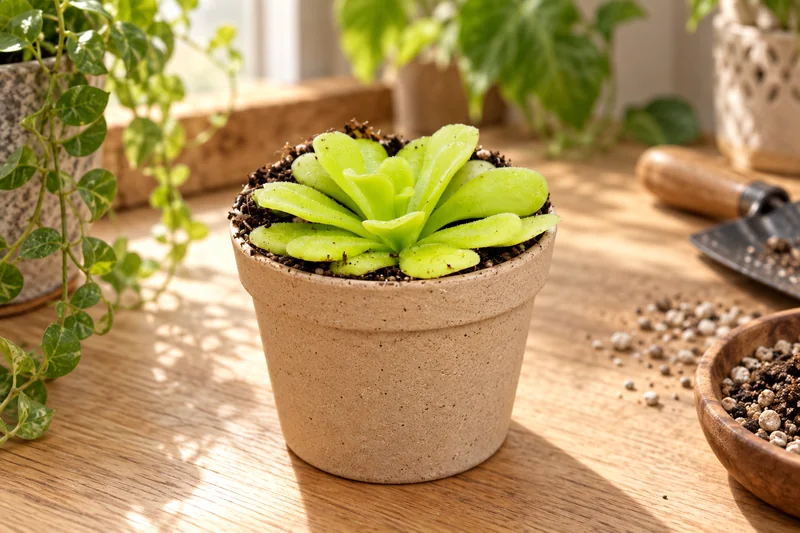
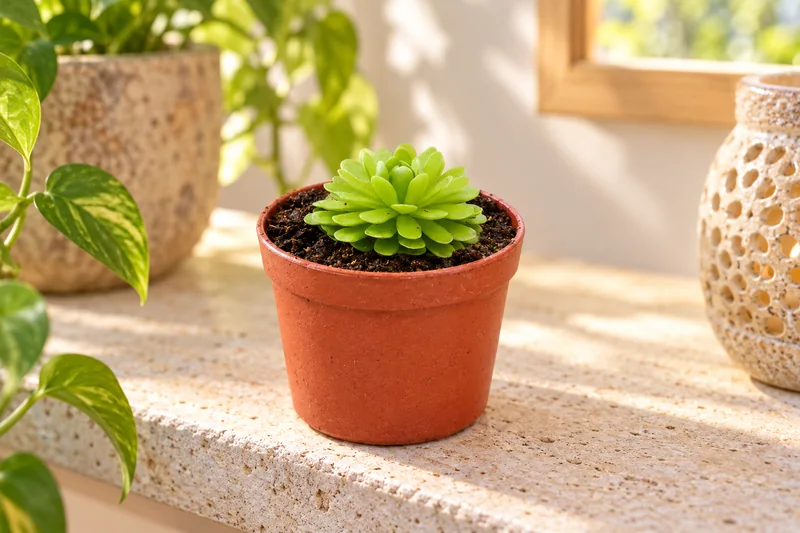
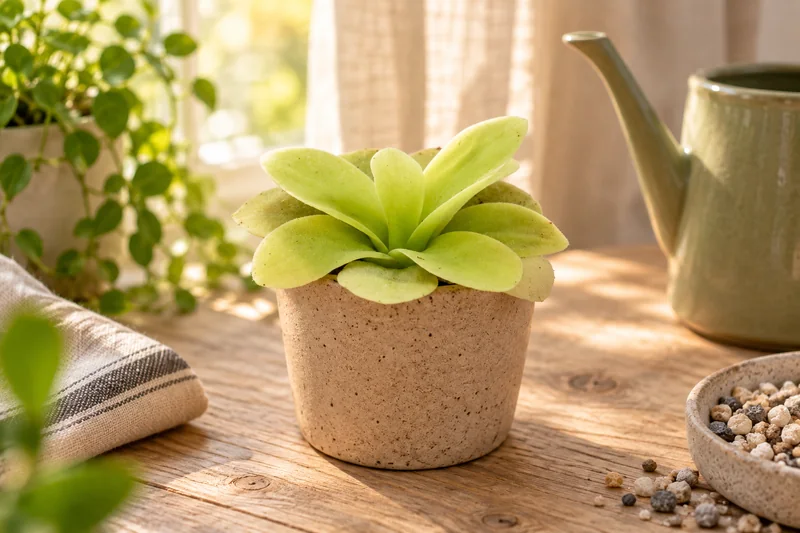
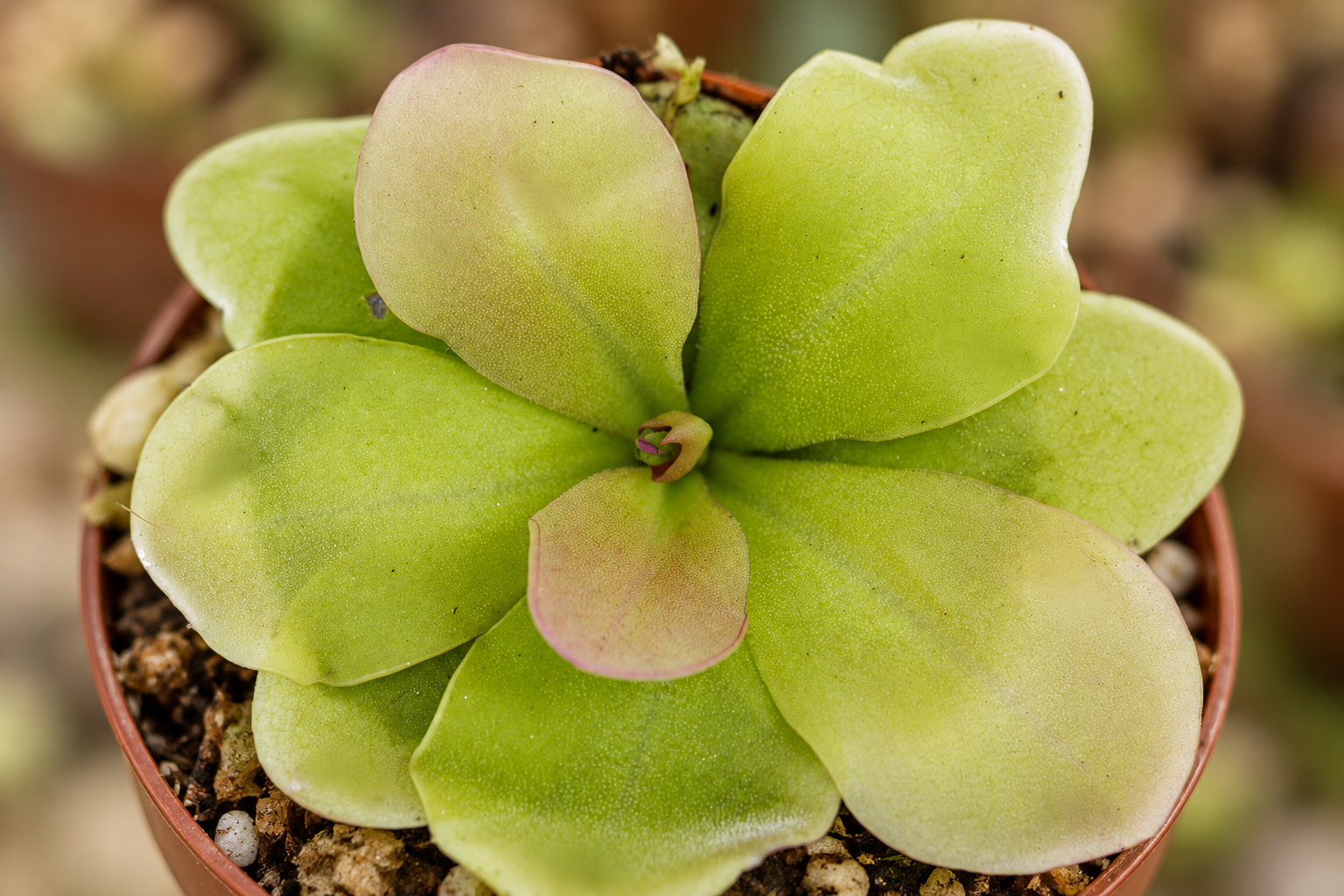
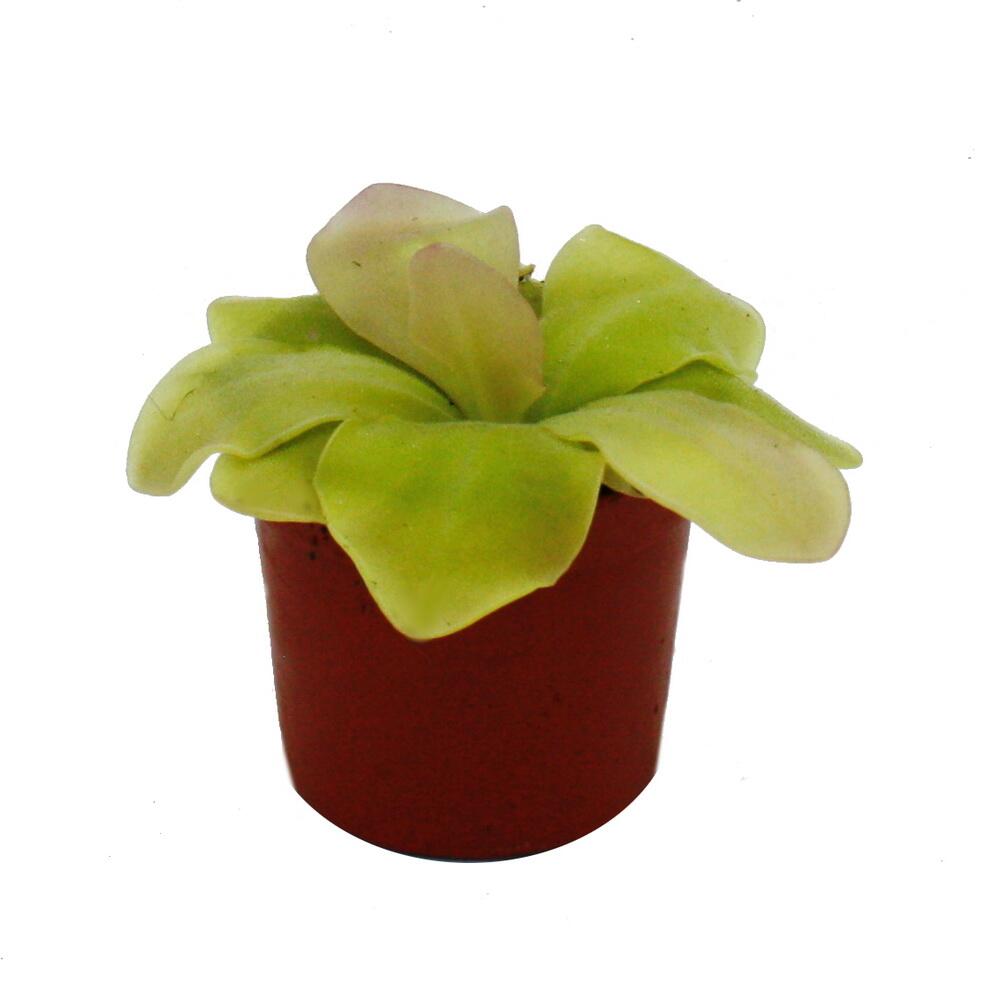
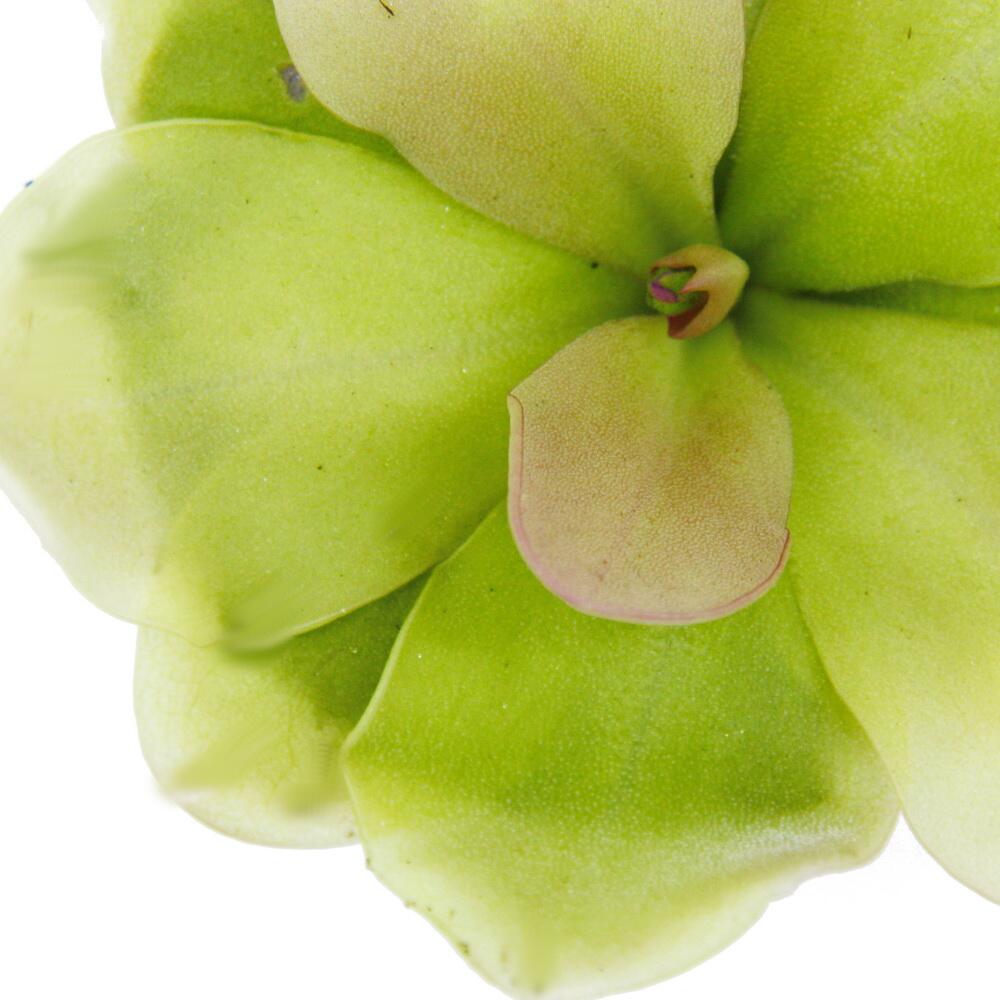
Maya butterwort Guatemala has a calm, open appearance created by its broad pale green leaves. They overlap in a flat rosette, with rounded ends and a delicate outline. Side lighting reveals a fine surface sheen. This comes from the glands on the trapping leaves and belongs to the plant. Our photographs of this plant clearly show its broad leaf surfaces; their size is not produced by a tall stem or dense branching. A position with some clear space around the pot therefore makes sense. This quiet observation spot also allows you to follow the development of younger leaves. New foliage can be watched without brushing the rosette when passing.
Guatemala is a trade name here
The offer names the plant Pinguicula spec. Guatemala and Maya butterwort. The abbreviation spec. indicates an unspecified species assignment. No additional scientific species name is added to this horticultural designation. Nor can a particular parental cross be inferred from it. The plant is introduced through its name and large green trapping leaves. Flowers belong to possible later development; the clean shop photographs show the rosette without a flower stalk. Start with its foliage when getting to know this butterwort. Changes in new leaves provide more immediate clues about cultivation than expecting a particular flowering date.
Putting the offered nine-centimetre pot in context
The specific offer states a nine-centimetre nursery pot but no precise delivery height. The low rosette extends sideways beyond the pot surface. Hold the container when unpacking and gently free the foliage from its wrapping. Initially place the pot where it stays accessible. A deep decorative outer pot would make checking moisture and water levels more difficult. Check existing substrate moisture before the first watering: a shipping date does not automatically mean water is immediately lacking. A shallow saucer and some space from neighbouring plants make ongoing care easier. Both the rosette centre and the surface of the small root space remain visible.
Adjust light and observe leaf development
Bright daylight at a window supports the rosette. After shipping, gently soften hot direct sun, for example with a light curtain. A dark shelf may allow you to look at the plant but is not a suitable permanent growing position. Suitable stronger lighting may encourage pink or reddish leaf tones. Our photographs of this plant initially show its green appearance; a particular colour is not forced. Clearly defined new dry areas after an abrupt move are a reason to check sun exposure. Keep the plant frost-free and protected from cold draughts. Leave space between the rosette and cold window glass, especially when airing the room in winter.
Control moisture instead of flooding the pot
While larger sticky leaves are growing, keep the root space moderately and evenly moist. A shallow water level in the saucer can help. Still check how the existing mixture takes up water and how quickly the pot loses it again. A permanently high standing-water level is no substitute for this observation. Add water carefully to the substrate or from below without pouring over the rosette centre. Rainwater is a suitable first choice; visible deposits are a reason to check water quality and the mixture. The drainage opening must connect with the saucer. In a closed outer pot, accumulated water must not rise unnoticed with repeated top-ups. Neither wipe away the fine leaf sheen nor enhance it with leaf-shine products.
Consider season and leaf phase together
Reduce watering as days shorten and water use decreases. Also take account of smaller, less sticky leaves if they develop. The trade name Guatemala does not imply a compulsory cold outdoor rest. Keep the plant bright and frost-free while watching moisture and new growth. Reduced watering must not let the pot dry out completely. A fixed weekly watering schedule ignores warmth, light and substrate, so make a brief check before each watering. If the rosette later forms larger trapping leaves again and takes up more water, adjust watering gradually. Care then follows the actual plant and its real water use.
An airy root space for continued cultivation
When repotting is necessary, use an open, airy mixture for tropical butterworts. Heavily pre-fertilised ordinary potting compost and concentrated fertiliser are not suitable uncontrolled standard care for the small root space. Carry the plant by its container and put as little strain as possible on leaf bases. A larger pot makes sense only when cultivation needs it. Suitable healthy leaves can be gently laid with their bases on lightly moist propagation substrate. New rosettes need time; such an attempt does not promise success with every leaf. A newly arrived small plant need not be reduced immediately for this purpose. Remove dead foliage carefully and first watch whether the centre continues growing healthily.
One plant, several views
Good to know
Is Guatemala a complete scientific species name?
No. The offer uses Pinguicula spec. Guatemala as a trade designation. No additional wild species or parental cross is claimed here.
How large is the offered plant?
A 9 cm nursery pot is stated. The offer does not promise a precise total height.
Why do the leaves shimmer?
Their glands produce a sticky secretion. Do not polish or wipe this surface.
Must there always be water in the saucer?
A shallow supply can help during active growth. Check water level and substrate and adjust them as water use decreases.
Why do the leaves turn pink?
Suitable stronger light can encourage pink to reddish colouring. Our photographs of this plant’s rosette show green foliage; a particular colour is not promised.
Does Guatemala need a cold winter rest?
A cold outdoor rest cannot be inferred from the trade name. Keep the plant bright and frost-free; water supply follows use and leaf phase.
Is flowering promised on arrival?
No. The clean photographs of the plant show its leaf rosette. Flowers remain a possible later development.
Sources and editorial note
- Exotenherz: own offer/originals (04.10.2026)
- Tanaka Tissue Technologies: Guatemala trade form/culture (04.10.2026)
- ICPS: tropical butterworts/leaf phases (04.10.2026)
- ICPS: tropical leaf cuttings (04.10.2026)
- RHS: water quality/carnivorous care (04.10.2026)
- Thomas Carow/GFP: direct trade-form observation/open ancestry (04.10.2026)
Shop offer, original photographs and specialist sources checked on 04.10.2026. Check current availability in the shop.