This plant at Exotenherz
Check the shop offer for current availability, price and what is included.
Product and delivery details are given in the individual offer.
Your care table
| Topic | What to do | Why it helps |
|---|---|---|
| Position | Choose bright filtered window light; soften strong sun after shipping. | The low rosette needs light, but its trapping surfaces should not suddenly overheat. |
| Watering | During active trapping-leaf development, keep moderately moist; use a shallow saucer. | Moisture should supply the small root zone without flooding the rosette centre. |
| Water quality | Preferably use rainwater and keep the saucer clean. | Repeated mineral-rich watering can create deposits in the small pot. |
| Substrate | Choose an open airy mix for tropical butterworts. | The balance of water retention and air must suit the chosen water supply. |
| Leaf care | Do not rub trapping leaves or treat them with leaf-shine products. | The shimmering sticky surface belongs to the leaf’s trapping function. |
| Nutrients | Do not use concentrated standard fertiliser or heavily pre-fertilised potting compost. | A small sensitive root zone does not tolerate uncontrolled salt doses. |
| Winter rosette | Water less during more compact leaf development, but do not let the pot dry out completely. | The changed leaf phase needs less water than the active summer rosette. |
| Repotting | Only when necessary, gently move into suitable substrate; keep leaf bases clear. | The rosette is carried by the container and its short roots are not unnecessarily strained. |
| Propagation | Carefully place a suitable healthy leaf with its base on slightly moist substrate. | New rosettes can develop from it; calm conditions matter more than wet leaves. |
Use clean rainwater or suitable distilled water. An ordinary jug filter does not reliably remove dissolved salts.
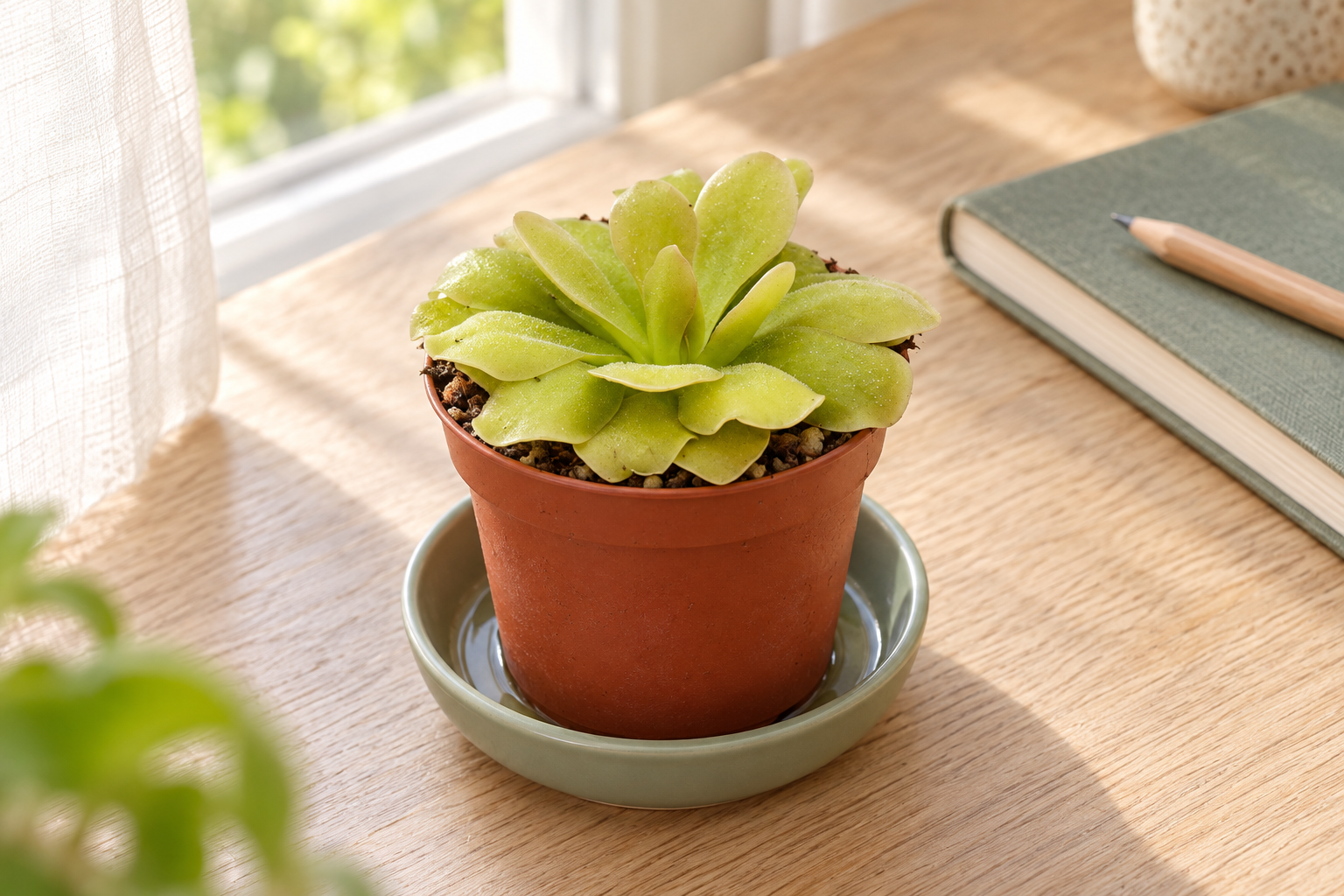
Put a little water in the saucer. The base of the pot stands in water; the compost surface and centre of the plant remain well above it.
Keep the root ball moist and the saucer clean. Light, temperature and the species-specific winter care in the table determine its needs.
A pale leafy tuft with a fine shimmer
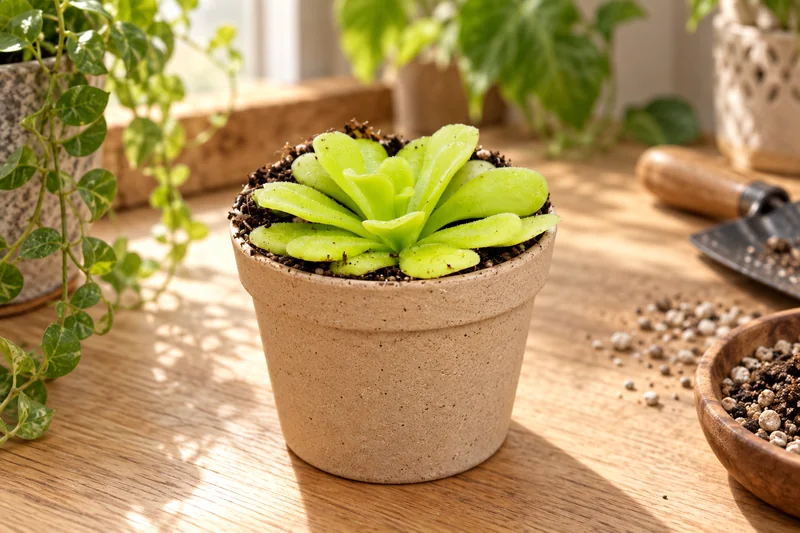
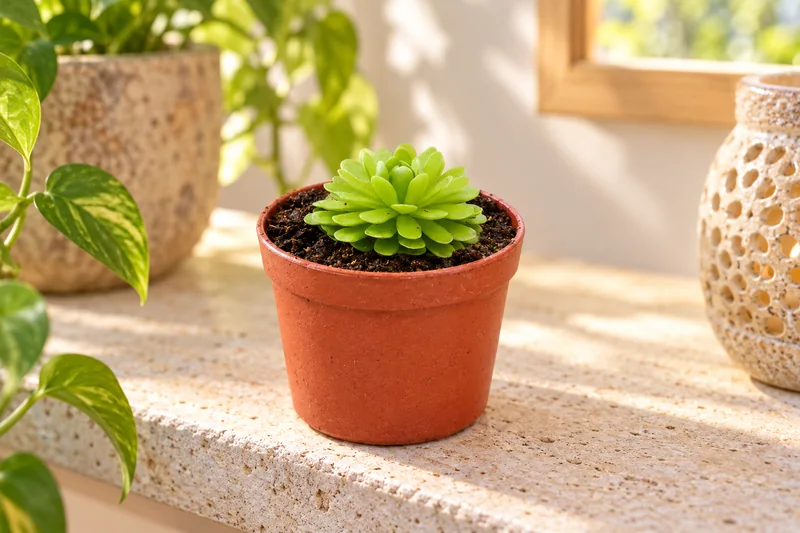
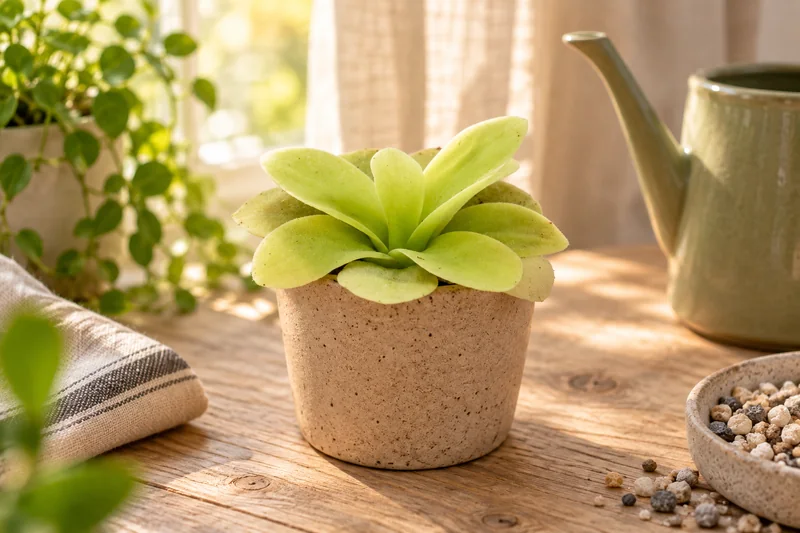
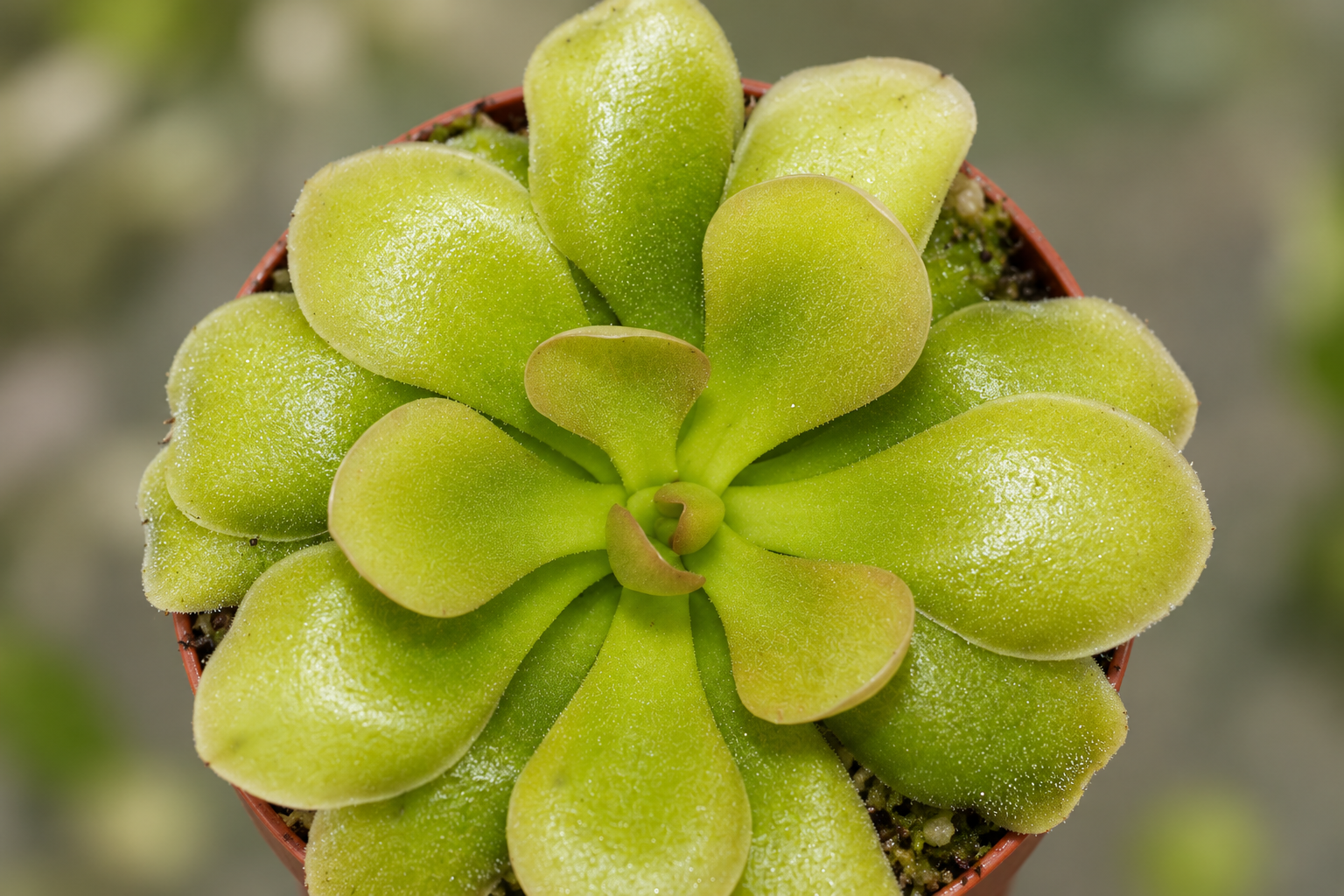
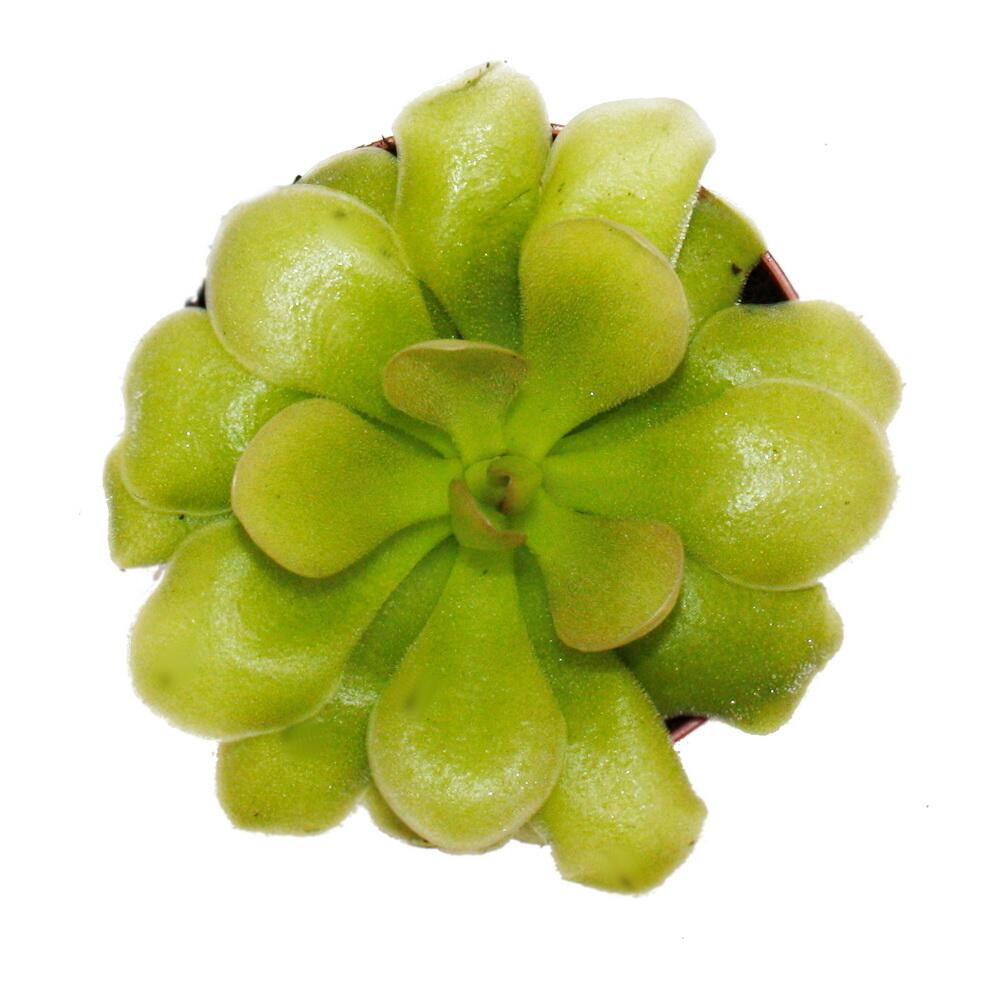
Weser stands out through its low rosette. The pale green leaves overlap loosely; their rounded ends and slightly wavy edges give the leafy tuft a soft outline. From above, the fine shimmer of the trapping surfaces is visible. Their glands produce sticky secretion to which small insects can adhere. The leaf is therefore not polished or rubbed shiny with a cloth. This small plant is easy to observe on a bright plant table without a flower needing to direct the eye. Leave free space beside the rosette so neither sleeves nor other leaves brush the sensitive trapping surfaces as you pass.
Weser is a named butterwort form
The name Pinguicula Weser here stands for a named horticultural form in the genus Pinguicula. Its tropical cultivation type differs from hardy butterworts outdoors. Under suitable conditions, small pink flowers can appear above the rosette, carried on slender upright stems. This is a later developmental step, not promised flowering on the offered plant. Leaf colour also remains variable: pink tones can occur in stronger suitable light. The own shop photograph initially shows green foliage. How new leaves develop and how much moisture the current rosette needs matters more for care than forcing a particular colour as quickly as possible.
Get to know the small rosette in its pot
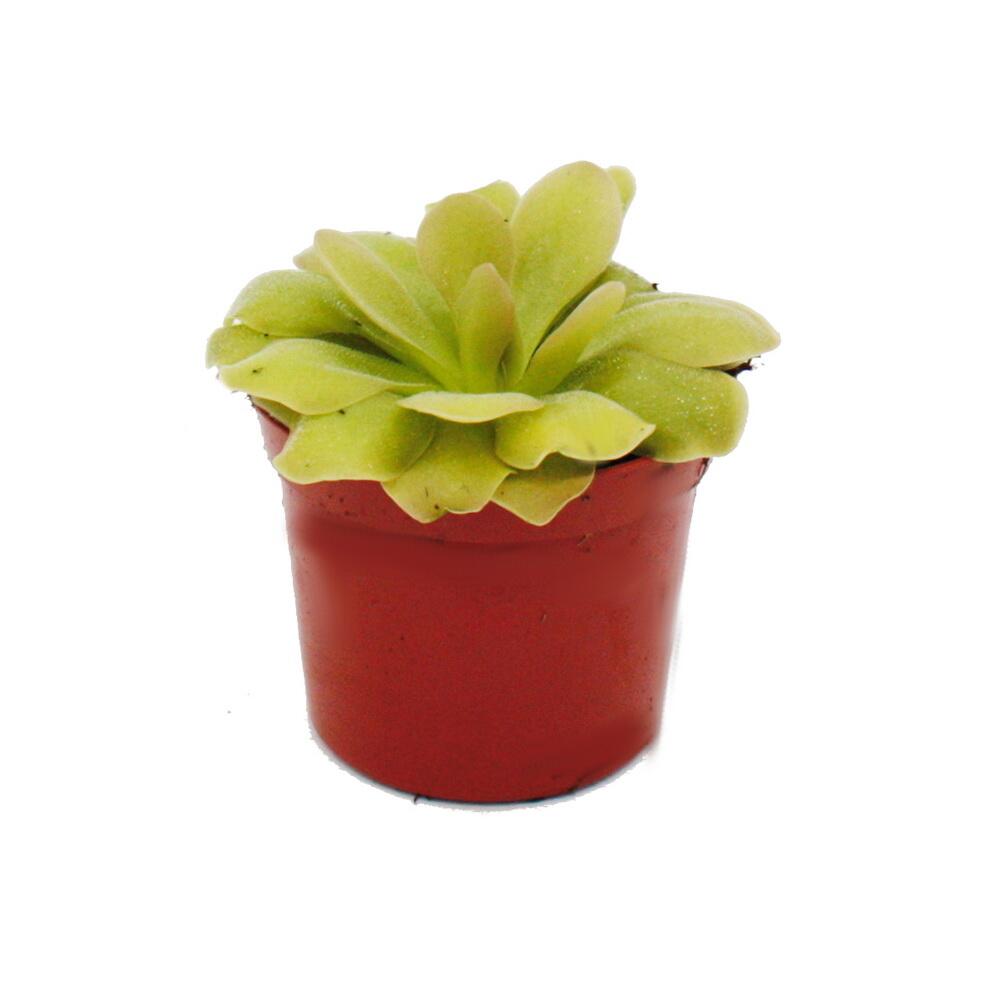
The specific offer states a nursery pot of nine centimetres. An exact delivery height is not given. The flat rosette mainly needs lateral space; when unpacking, therefore hold the container and carefully release packaging from the foliage. Afterwards check the existing substrate moisture before adding water. A small shallow saucer makes continued supply easy to see. In a decorative cover, the inner pot must stay accessible so the water level can be checked. Weser does not need a large reserve pot as its first care step. Its flat rosette stays clearly visible. First observe the plant at the selected position. This teaches you how quickly its existing root zone loses moisture between two checks.
Gently use filtered window light
A bright window position with filtered daylight suits it well. A dark room corner gives the low rosette too little light, even if a small plant would look decorative there. Soften hot direct sunshine behind glass, especially after shipping. A pale curtain can help without darkening the whole plant position. Weser remains frost-free; avoid cold draughts during ventilation and contact with winter-cold glass. Also do not place it immediately above a hot radiator. After a change of position, it is worth observing new leaves. A slowly appearing pink colour and suddenly dry, damaged leaf areas are different phenomena and are not treated alike.
Shallow water and an airy foundation
While the rosette actively develops sticky trapping leaves, the substrate remains evenly, moderately moist. A shallow saucer of rainwater can ease supply; a deep water bath is not needed. Still check the pot rather than continually raising the water level regardless of warmth, light and mix. Water carefully at the substrate or through the saucer without flooding the leaf centre. Open airy substrate for this butterwort type combines moisture with air in the root zone. Heavily pre-fertilised ordinary potting compost is not a good default choice. Concentrated feeding is not part of a healthy small plant’s daily routine. Salt deposits on the surface are a reason to check water quality and substrate.
The winter rosette determines further watering
Through the year, Weser can develop more compact, less sticky leaves. Do not push this changed rosette towards its summer form with extra wetness. Reduce watering and let the saucer empty between applications; the pot should nevertheless not dry out completely. The difference lies in leaf condition and consumption, not the date alone. A bright frost-free position remains important even in winter. Keep the plant away from wet cold. If larger trapping leaves later reappear, gently adapt moisture to the new growth. A quick look at the leaf centre, edge and substrate provides more guidance than a fixed weekly watering day.
Patiently accompany new rosettes
Healthy butterworts can be propagated through suitable leaf cuttings or carefully removed leaves. Gently detach an undamaged leaf with its base and place it on slightly moist suitable propagation substrate. Bright indirect light and controlled moisture accompany the attempt; the leaf should neither lie in water nor dry out. A newly arrived small rosette does not need to be thinned immediately for this. First check its new growth. Carefully remove dead leaves without damaging healthy trapping surfaces. Soft areas or conspicuously deformed foliage call for closer investigation of causes and possible pests. Routine sprays are not a substitute for suitable cultivation on this sensitive plant tissue.
One plant, several views
Good to know
What does Weser mean?
Here it is the name of a horticultural butterwort form. The portrait describes the specific offered rosette in a 9 cm pot.
Is a particular height promised?
The own offer states the pot diameter, but no exact total height. The rosette grows low and sideways.
Are the shiny leaves dirty?
The fine sticky shimmer belongs to the trapping surfaces. Do not polish or wipe them.
Must the plant constantly stand in deep water?
No. Shallow water supply during active growth is combined with airy substrate and regular checks.
Why do winter leaves look different?
Weser can develop a more compact rosette. Water less then, without letting the pot dry completely.
Do the pink flowers arrive immediately?
Flowers are possible with suitable development. The own photos show a green rosette; particular flowering is not promised.
Can I take a leaf for propagation?
A suitable healthy leaf with an intact base can form new rosettes. Do not immediately reduce the small fresh delivery plant heavily for this.
Sources and editorial note
- Exotenherz: own Weser offer and originals (04.10.2026)
- RHS: Weser, rosette and yearly care (04.10.2026)
- ICPS: tropical butterworts and leaf phases (04.10.2026)
- ICPS: leaf cuttings of tropical butterworts (04.10.2026)
- RHS: water quality and carnivorous-plant care (04.10.2026)
Shop offer, original images and specialist sources checked on 04.10.2026. Current availability in the shop.