This plant at Exotenherz
Check the shop offer for current availability, price and what is included.
Check the shop for the current price, availability and offer contents.
Your care table
| Topic | What to do | Why it helps |
|---|---|---|
| Light | Choose a bright position with filtered daylight. | The woodland plant does not receive sudden hot midday sun. |
| Water | Water thoroughly after slight surface drying; do not let the root ball dry out completely. | The plant grows in damp woodland positions but also needs air around its roots. |
| Drainage | Use an inner pot with drainage holes and empty the cover pot. | Standing water is not a suitable way to create air humidity. |
| Soil | Choose humus-rich, loose potting compost with a stable structure. | Moisture should remain available without depriving roots of air permanently. |
| Room climate | Keep evenly warm, away from heating and without cold draughts. | Dry hot air and sudden cold put young shoots under strain. |
| Training | Guide shoots loosely on a small support or let them hang freely. | Young climbing shoots need space and should not be constricted. |
| Nutrients | Feed moderately according to the label during visible growth. | The small plant does not tolerate an unnecessarily high fertiliser dose. |
| Winter | Keep the bright warm position and adjust water to consumption. | Less daylight can slow growth and therefore requirements. |
Check the compost and pot weight. The care table explains how far the compost may dry.
Water only when needed. The water should reach the root ball without spilling over the rim.
Remove surplus water from the saucer or cachepot. Then return the plant to a suitable position.
Leaf veins like a little network of paths
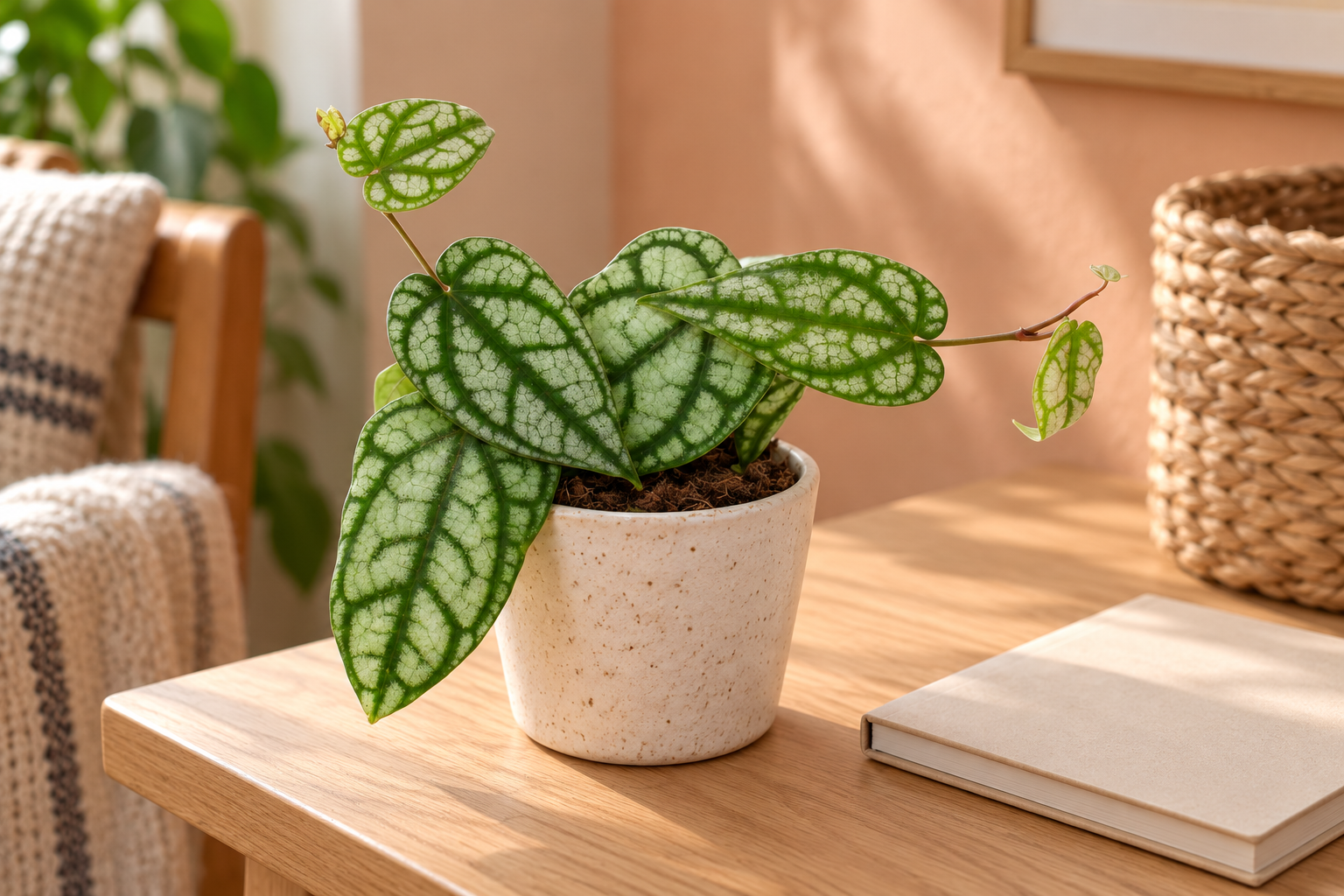
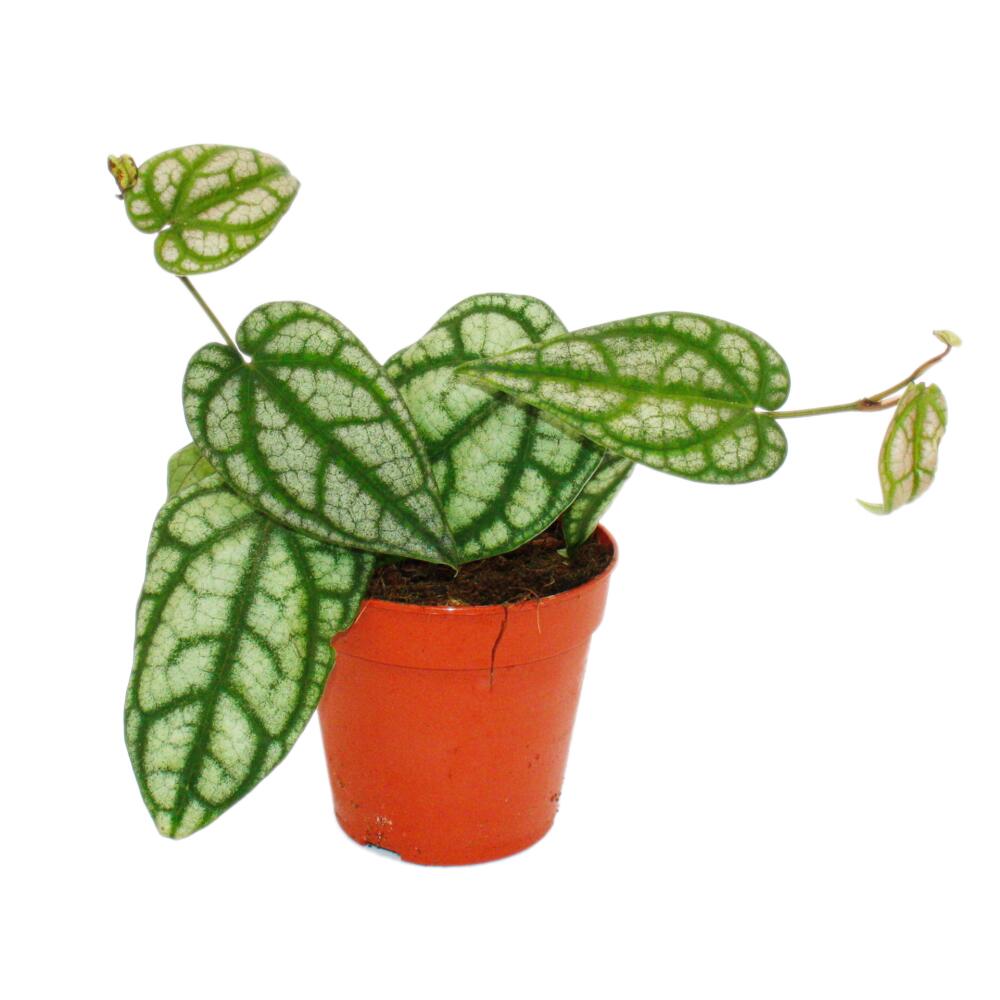
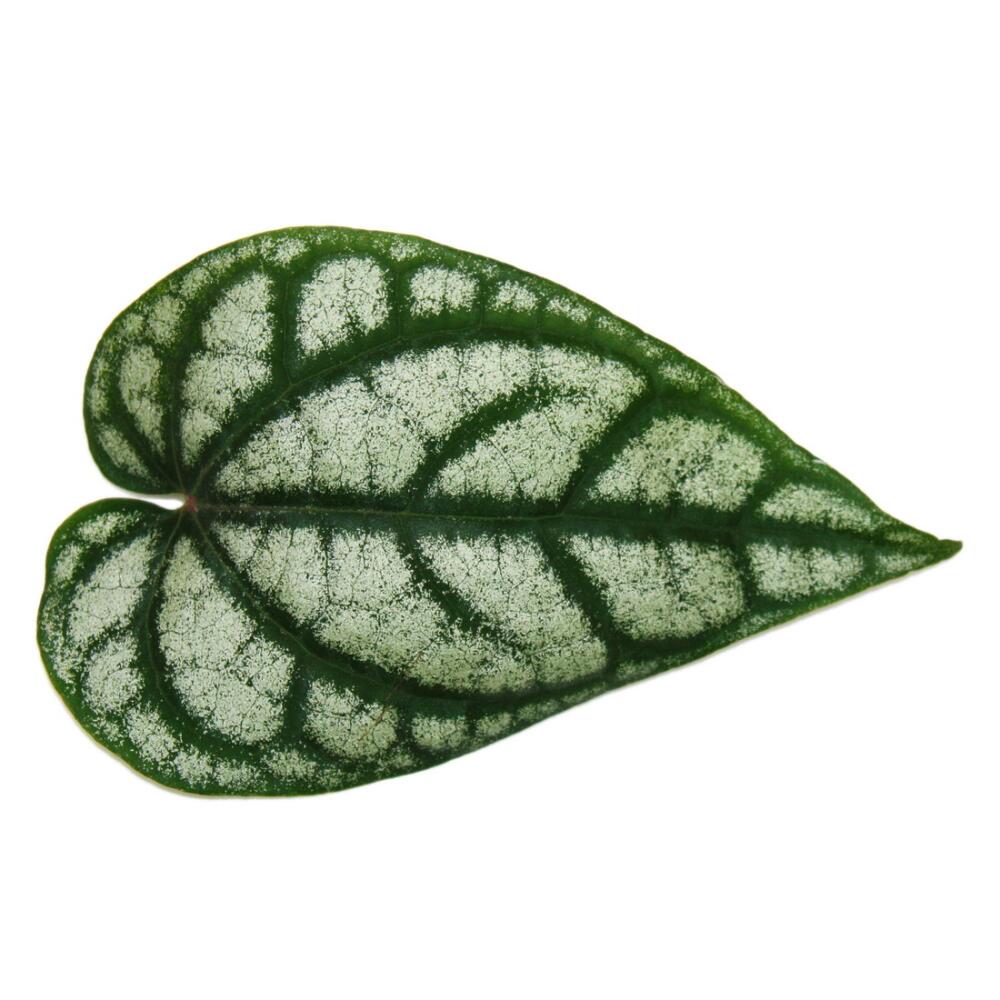
The climbing pepper attracts attention with its leaves. A dark green vein network crosses distinctly paler areas on heart-shaped surfaces. Depending on the light, the foliage looks silvery or fresh pale green. It does not need a large flower to be interesting: a few leaves and a new shoot tip already make this small plant an appealing companion. We like to place it at a well-lit workspace, where the pattern can be observed closely. A dark shelf is not a good long-term solution, despite attractive decorations.
A young climber in a small format
Piper sylvaticum belongs to the pepper family and grows as an herbaceous climber. The linked shop offer describes a 12 cm pot and approximately 20 to 25 cm total height. Initially, the plant is manageable; longer shoots develop later. This delivery size does not guarantee a final height or maximum climbing length. The original image shows its characteristic pale leaf pattern and thin young stems. A small support can direct growth upwards; with space at the container edge, shoots can also trail. The same plant can gradually change its form this way.
Consider its woodland character when choosing a position
A bright to partially shaded position with filtered daylight suits this pepper. Its origin in damp woodland areas helps us understand it: there can be plenty of brightness, but hot direct sun is not suddenly directed onto young leaves. If the pot stands beside a window, check how much light actually reaches the lower leaves too. A warm room with calm conditions makes acclimatisation easier. Protect it from cold airflow when ventilating. A permanently shady spot far into a room is different from bright partial shade outdoors.
Moisture in the root ball rather than water in the cover pot
Check the soil and the weight of the inner pot before each watering. Once the surface has dried a little, water slowly and thoroughly. The roots should receive a reliable supply without the small root ball regularly drying out completely. Remove excess water afterwards. A closed cover pot can look attractive but requires this check; water collecting unseen inside does not make roots happier. Shorter winter days change consumption. It is better to note how long soil remains moist at your position than to choose a fixed weekday for watering.
The small pot should provide air and support
Humus-rich, loose soil combines moisture with sufficient pore space. At a later repotting, provide only a little more container space when roots have filled the existing root ball well. Hold young stems carefully and do not pull on the large leaves. A small climbing support can be positioned sensibly during repotting, without repeatedly piercing the root ball afterwards. Ties remain loose and are checked as growth progresses. Feed moderately according to the fertiliser label during visible new growth. If the plant stalls in dark winter weeks, extra fertiliser is no substitute for a better-lit position.
Observe room air and leaf surfaces attentively
Being directly beside a radiator can strain soft young leaf tips. A bright warm position at a sufficient distance from heating is therefore more helpful than frequent, frantic misting. Allow air exchange without cold draughts. Do not trap large leaves among decorations and handle them gently during care. Occasionally check undersides and stem bases for signs of pests. Dry edges can have different causes; moisture, room climate and development should be assessed together. A single older leaf is judged differently from new growth damaged simultaneously on several shoots.
Accompany ornamental pepper through the seasons
For winter, the plant still needs a bright, warm, frost-free position. It is not presented as a hardy garden plant. Longer shoots can develop their form; if space is short, arrange individual tips deliberately rather than immediately removing every new leaf. The name pepper is a botanical and horticultural classification here, not an invitation to harvest a spice. The offering is an ornamental foliage plant. Enjoy a healthy newly unfurled leaf and the development of its vein pattern in particular: the attraction of this small climber lies precisely in such slowly visible changes.
One plant, several views
Good to know
Is this ordinary black cooking pepper?
No. This is Piper sylvaticum as an ornamental foliage plant; no promise of spice or edible use is involved.
Can it grow on a dark bookshelf?
A bright shelf can suit it if enough daylight reaches the leaves. A dark shelf corner is not a suitable permanent solution.
Does it immediately need a large climbing support?
No. Young shoots can be guided loosely on a small support or left to trail. The plant grows gradually into its later form.
Is the pale leaf area automatically damage?
The paler area with a dark vein network belongs to the offered leaf pattern. Compare newly appearing dry or brown patches with growing conditions instead.
Why do the leaves hang despite moist soil?
Check free drainage, root condition and warmth. Extra water can aggravate existing wetness.
Should it have a cold rest in winter?
A bright warm, frost-free position is intended for this tropical houseplant. Water and fertiliser are adjusted to slower growth.
Sources and editorial note
- Exotenherz: offer and original photographs (02.10.2026)
- NParks: Piper sylvaticum (02.10.2026)
- RHS: growing houseplants (02.10.2026)
- RHS: leaf problems in houseplants (02.10.2026)
Shop offer, article number, GTIN, availability and original images checked directly on 02.10.2026. Specialist sources read directly. Identity and leaf pattern compared with the shop image and NParks. No invented final height, flowering promise, spice use or rigid watering intervals.