This plant at Exotenherz
Check the shop offer for current availability, price and what is included.
Check the shop for the current price, availability and offer contents.
Your care table
| Topic | What to do | Why it helps |
|---|---|---|
| Light | Choose bright filtered daylight; shield hot direct sun. | Rhipsalis belongs to cacti favouring indoor partial shade. |
| Water | Check soil and water slowly, moderately after drying begins. | Need follows position and growth rather than fixed weekly intervals. |
| Drainage | Drain surplus and remove water from outer pot or saucer. | Persistent wetness affects roots and can encourage rot. |
| Substrate | Use loose, well-draining potting mix. | Root air and controlled partial drying make supply easier. |
| Repotting | Give moderately more space when well rooted or structure deteriorates. | An oversized pot keeps much unrooted soil moist for a long time. |
| Feeding | Feed sparingly during visible growth as directed. | Slower growth needs fewer extra nutrients. |
| Cool months | Keep protected indoors and reassess water use with lower light. | Soil often dries slower; prolonged forced dryness is no general Rhipsalis programme. |
| Shoots | Lift the container when moving; cleanly remove damaged or obstructive branches if needed. | Branching need not be regularly trimmed into a fixed shape. |
| Propagation | Consider healthy shoot pieces and care cautiously initially. | Poorly rooted cuttings need care; constantly wet soil raises rot risk. |
| Checking | Review moisture, drainage, light and branching separately after changes. | Dryness, standing water and possible pests need different responses. |
Check the compost and pot weight. The care table explains how far the compost may dry.
Water only when needed. The water should reach the root ball without spilling over the rim.
Remove surplus water from the saucer or cachepot. Then return the plant to a suitable position.
Short branches bring fresh green to life
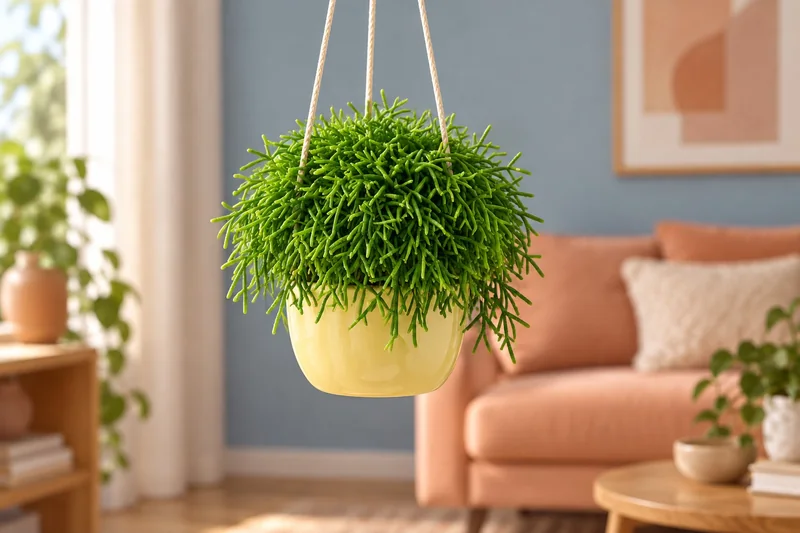
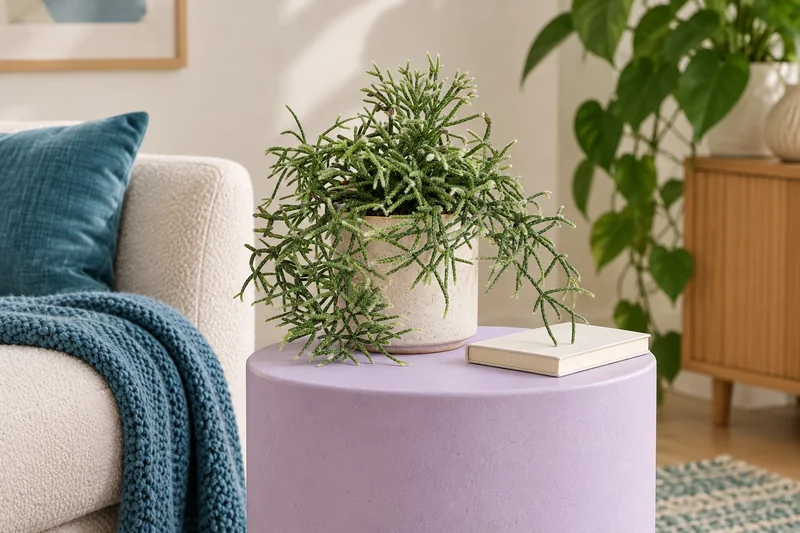
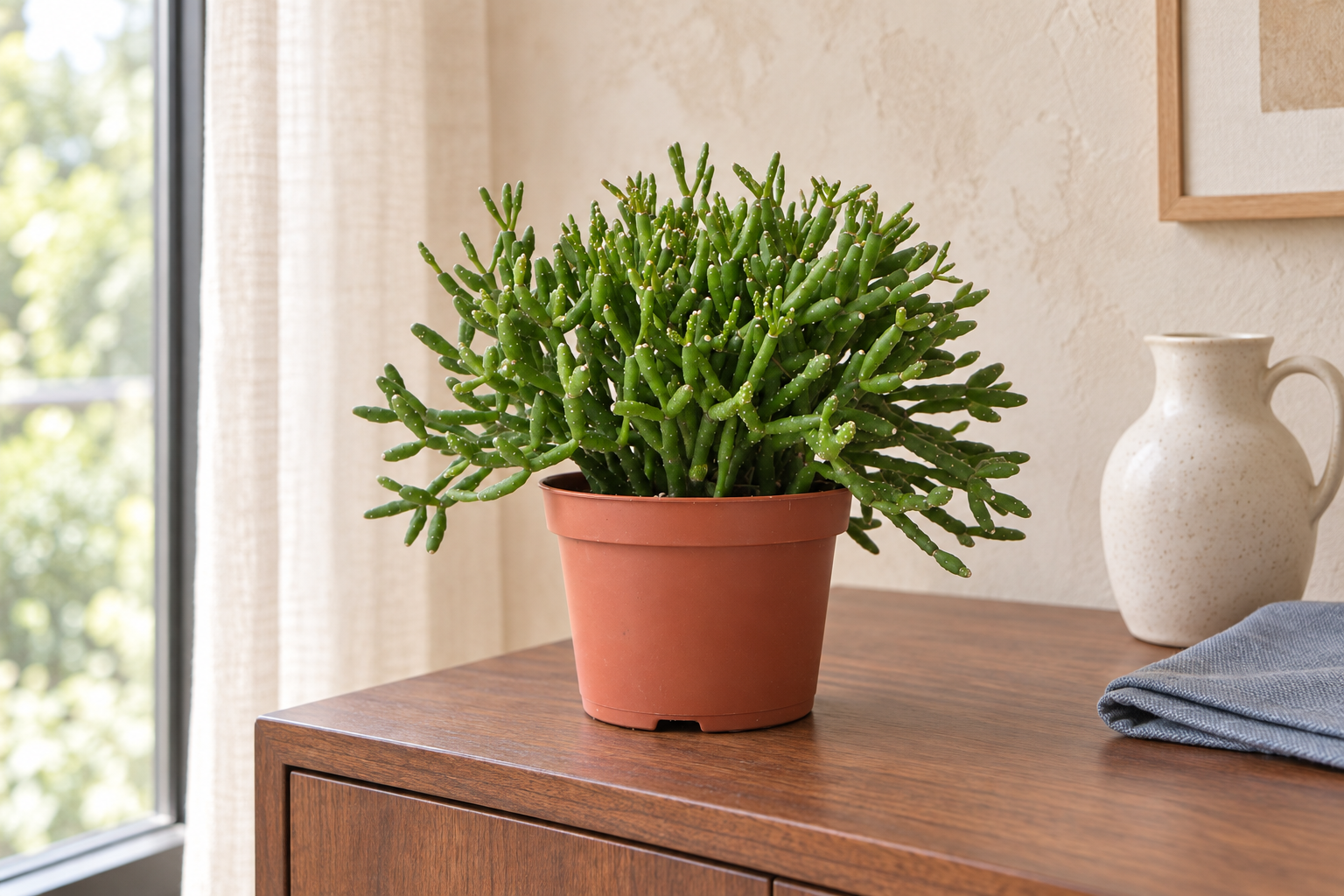
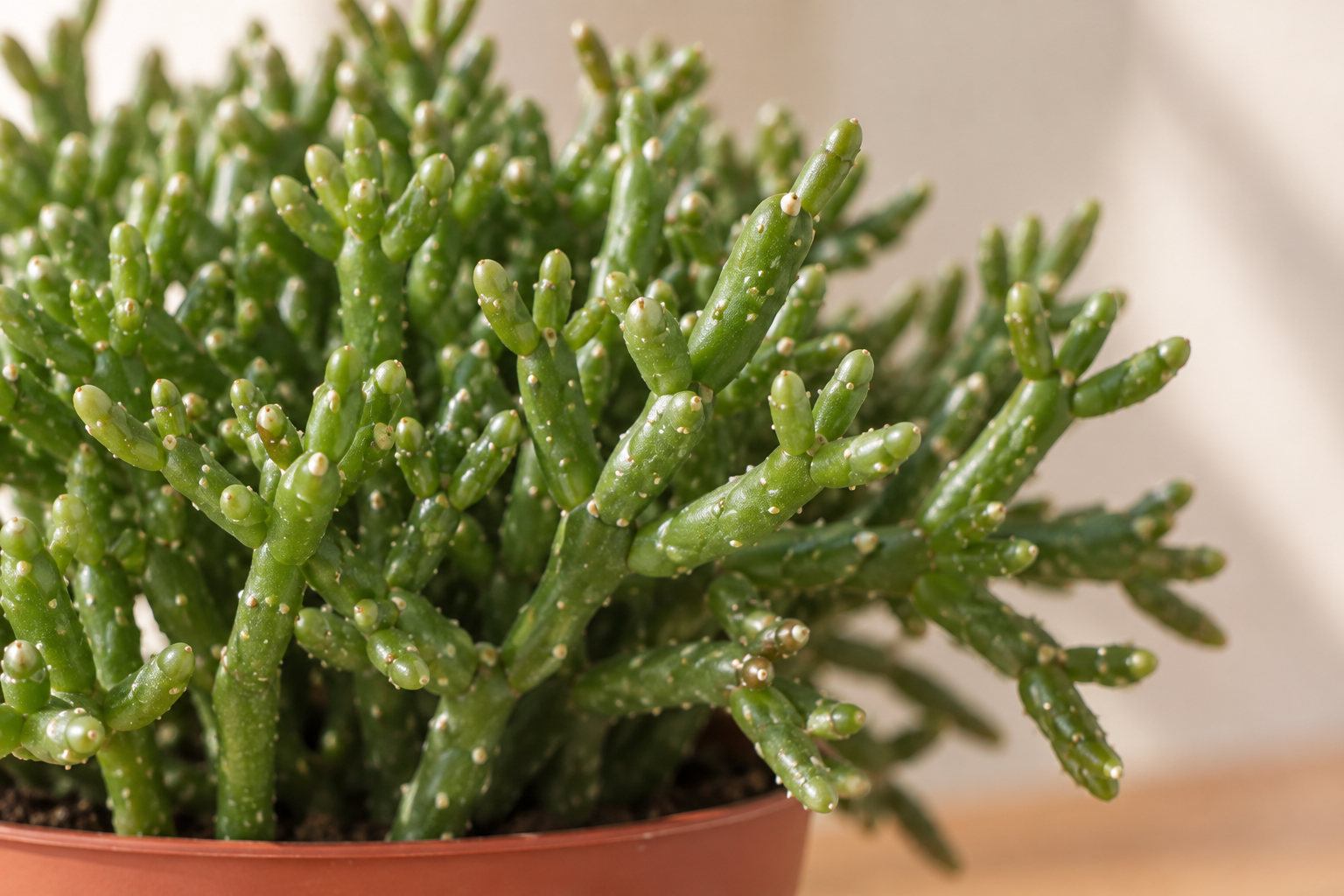
At first glance this looks like a dense green tuft. Closer, many short rounded shoot sections branch repeatedly and show fine pale dots. Little spaces and changing directions give the coral cactus a lively construction. The breeder calls it Cereuscala Gold and describes light-green, rather short, highly branching stems. Green parts are shoots, not ordinary leaves. A bright side table allows close viewing, but actual daylight must reach it; attractive room styling alone does not provide light.
Cereuscala Gold is this offer’s name
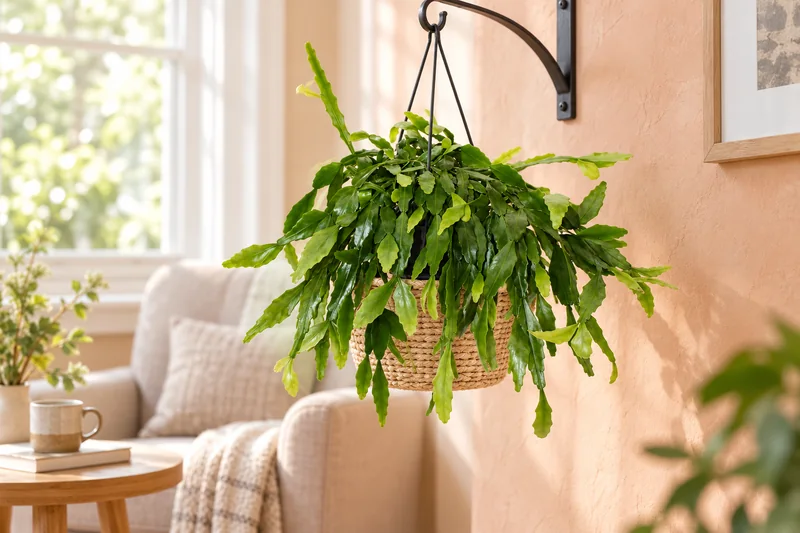
Shop and breeder call it Rhipsalis Cereuscala Gold. The trade name here belongs to a green, short-branched houseplant. Rhipsalis is in the cactus family, with shoots ranging from long thin stems to densely branching forms. Many grow as epiphytes on other plants. Their particular care helps indoors: bright filtered light, air around roots and attentive water supply. Gold promises no yellow stems. Many green shoots shape the offered plant’s character, and its dense branching helps observe later changes.
A bright place away from hot sun
Choose where daylight reaches well without hot direct sunshine. Curtains can soften strong exposure; window orientation and season also alter light. On a shelf, the board above must not continually shade shoot tips. An impression of indoor partial shade still requires sufficient brightness. In a darker position, Rhipsalis grows slower and uses less water. Check light and watering together when moving the pot. A nearby running heater or cold ventilation draught is unsuitable. A steady sheltered indoor position makes care manageable.
Check soil first, then give measured water
Dense branches easily distract from soil. Look underneath and feel whether substrate is starting to dry. If still distinctly moist, wait. Once drying begins, slowly give measured water to the soil and drain surplus. The root ball needs reliable water without staying constantly wet. Repeated long complete drying is no goal either. Observe drying speed in your position instead of imposing several weeks between waterings. Brightness, warmth, pot and growth work together. Spraying green branches cannot replace watering roots.
Free drainage matters more than a large reserve pot
A growing pot with a clear drainage hole simplifies watering. Position it to drain surplus then inspect any outer pot or saucer and remove remaining water. Use a loose, well-draining mix giving roots air. Compacted soil wet for a long time complicates dosing. Repot when the root ball fills the pot well or soil structure deteriorates, adding only appropriate space. A huge pot contains much unrooted soil and easily stays too moist. Support the root ball and container when transferring, leaving branches free.
Observe growth and adjust supply
While new shoots form, feed sparingly according to the product’s directions. Extra strong feed cannot improve a dark or too-wet position. Less growth also needs less fertiliser. Soil often dries more slowly in low-light weeks. Check just as carefully and adjust water to real use. Keep protected indoors, away from cold draughts and direct heaters. Do not impose a desert cactus’s dry winter programme on this Rhipsalis group. Root condition, actual brightness and new shoots matter.
Let branches retain their own structure
Regular shaping is not basic care. Allow short green branches space and identify any actually damaged or obstructive parts. Remove those selectively with clean tools. Lift the pot when moving, never pull the tuft. Healthy Rhipsalis stem pieces can generally be used as cuttings; choose suitable healthy sections. Care cautiously for young cuttings with poorly developed roots; constantly wet soil increases rot risk. A calm routine for the original plant is often the best start before attempting propagation.
Consider changes in context
If branches shrink, soften or discolour, check soil, drainage and position first. A dry pot needs a different response from a wet root ball with soft brown tissue. Reddish changes may prompt reviewing excessive light, but colour alone proves no cause. Inspect dense branches for unusual deposits or small moving creatures too. Mealybugs, scale and spider mites are general possible problems of cacti and succulents. Pale reference dots do not alone imply pests. Observe new changes on your plant. Correct an identifiable cause and check development rather than making several changes at once.
One plant, several views
Good to know
Is Cereuscala Gold a cactus?
The trade form is classified Rhipsalis, a cactus genus cared for with filtered light and adapted watering.
Does Gold mean yellow leaves?
Gold is part of the trade name. Description and associated photo show green short branching shoots, with no promised later colour change.
When should I water?
Feel soil and wait until drying starts. Clearly moist substrate needs no extra water yet. Then supply moderately and drain surplus, avoiding long complete drying.
Is spraying branches enough?
Spraying cannot replace watering soil. Actual substrate condition and free drainage determine supply.
Must I buy a bigger pot immediately?
Decide by root-ball and substrate condition. While cultivation works, a large reserve pot is no benefit; unnecessary soil stays moist longer.
Does it need regular pruning?
No. Remove individual damaged or obstructive shoots with clean tools; otherwise retain natural branching.
Should it be completely dry in winter?
Supply follows real soil and growth even in low-light weeks. Intervals may increase, without a fixed prolonged complete drought.
Are pale dots pests?
Fine pale dots are visible in the reference and do not alone prove pests. Unusual woolly deposits or moving creatures on your plant need closer checking.
Sources and editorial note
- Exotenherz: our offer and associated shop photograph (6 October 2026)
- Kolibri Company: Rhipsalis care and Cereuscala Gold trade designation (6 October 2026)
- Royal Horticultural Society: genus features in the Rhipsalis cereuscula profile (6 October 2026)
- Royal Horticultural Society: indoor culture explicitly excepting Rhipsalis (fully checked 6 October 2026)
Our offer and associated shop photograph checked on 6 October 2026. Cereuscala Gold is used as a trade name; care considers the particular needs of Rhipsalis.