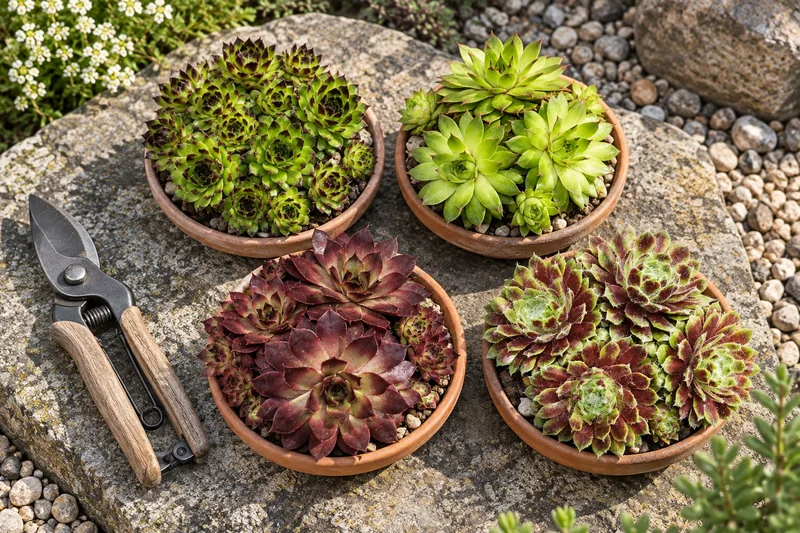
This plant at Exotenherz
Check the shop offer for current availability, price and what is included.
Check the selected shop offer for price, availability and delivery contents.
Your care table
| Topic | What to do | Why it helps |
|---|---|---|
| Arrival | Check a firm centre, root-ball moisture and secure seating. | Small growing pots require observed establishment. |
| Position | Sunny and open outdoors; prevent neighbours growing over rosettes. | Unobstructed light maintains the low habit, although colour may still change. |
| Planting | Plant in frost-free spring at the previous root-ball level. | Keep the rosette centre free and gently bring soil around the roots. |
| Substrate | Mineral-structured draining mix with free container openings. | Surface grit cannot replace drainage from the root zone. |
| Watering | Water the roots according to root-ball moisture and let excess drain. | Leaf colour alone proves neither dryness nor sufficient supply. |
| Feeding | Usually no extra feed in garden soil; feed containers sparingly if needed. | More fertiliser does not reliably intensify varietal colour. |
| Development | Observe colour changes and firm new leaves. | Seasonal green is not automatically a care mistake. |
| Propagation | Detach healthy offsets in spring and root carefully. | This continues the existing named selection. |
| Winter | Keep excessive rain away while maintaining air and drainage. | Avoid persistent moisture at leaf bases and roots. |
For young plants, feel the soil directly at the root ball. The surface and deeper soil may have different moisture levels.
Water thoroughly after planting; later, water according to the soil, weather and establishment rather than a fixed calendar.
Avoid standing water. For plants in containers, also check that water runs out of the drainage hole.
Flasher starts green and changes its face
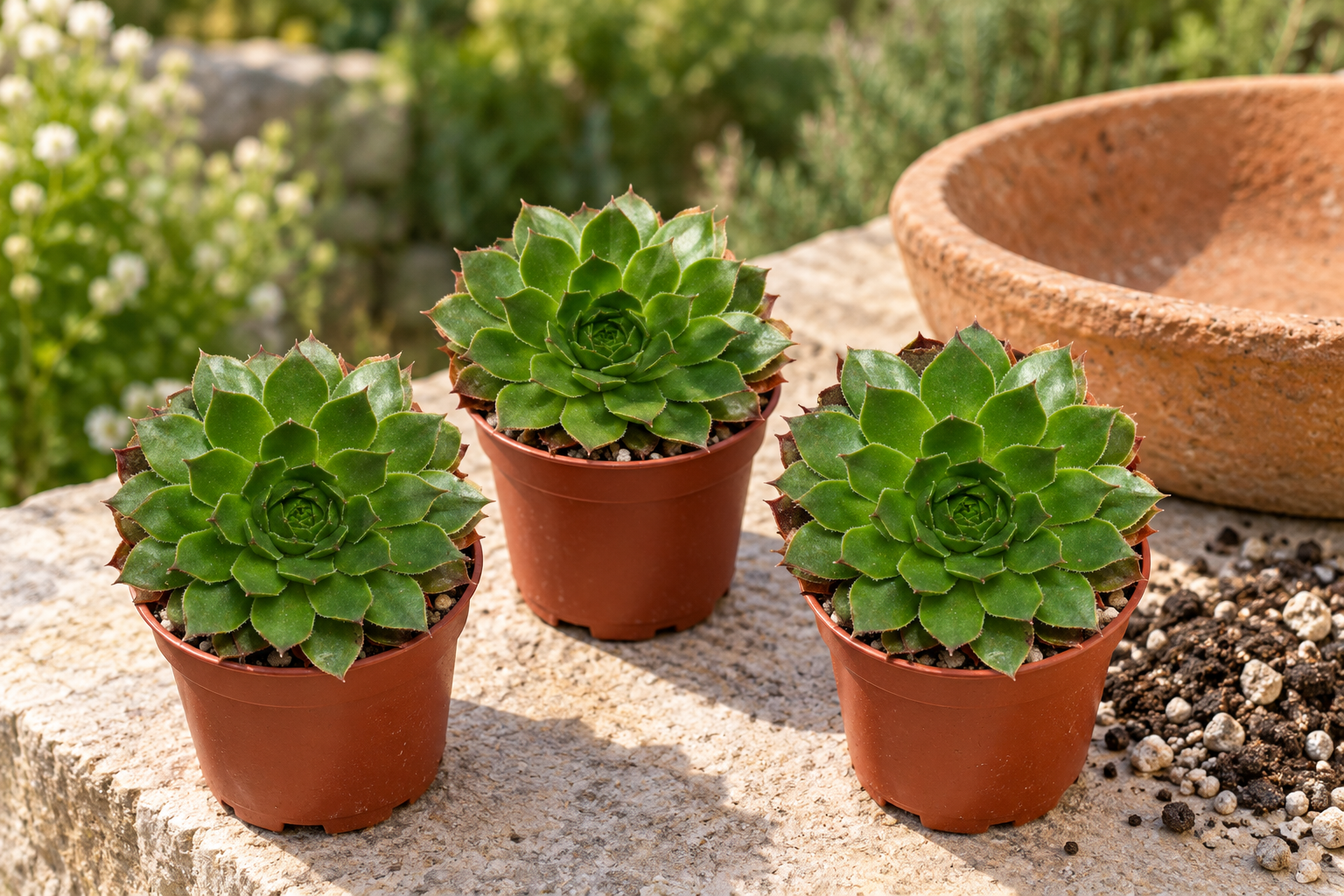
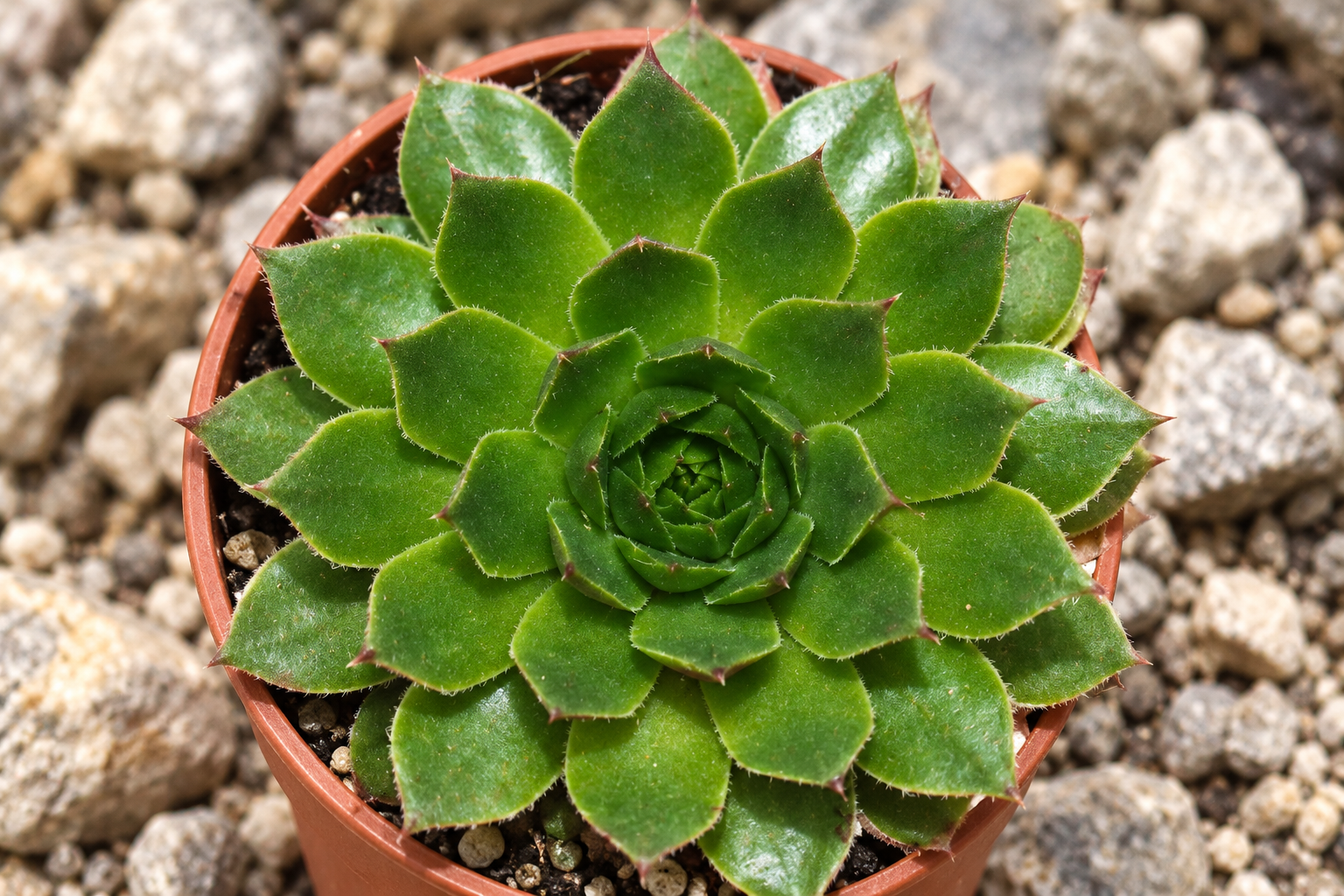
The clean original shop photograph shows a fresh green rosette. Its fleshy leaves taper to small points, overlap closely and carry a fine pale margin. Some outer tips already show a restrained reddish-brown tone. Flasher is one of the named houseleek varieties in Sempervivum, within Crassulaceae. Young growth can be particularly striking in spring: a nursery’s direct description records strong red which fades again with the season. This is an appealing change, not a fixed painted colour. A green delivered plant is therefore not automatically poorly cared for. First assess the firm rosette structure and emerging leaves. Light, temperature and developmental stage affect leaf colour; one photograph cannot capture that development for every month. A dark leaf tip alone is not yet proof of damage.
Three small growing pots are the beginning
The offer contains three plants of the same selection, each in a 5.5 cm growing pot and approximately 6–9 cm in overall height including the pot. This describes their young start, not future rosette diameter or a flower stem. Carry plants by the container when unpacking and release packaging without pulling leaves. Check root-ball moisture and a firmly seated centre. If a rosette remains loose on a wet root ball, gentle root inspection is worthwhile before planting. An initially single rosette can later form offsets, gradually creating a small mound of regularly arranged heads. The variety description records medium-sized symmetrical rosettes without promising a fixed diameter for this young offer. Let each plant establish roots before expecting a densely filled bowl or a larger colony.
Spring colour needs a suitable outdoor position
Choose an open sunny position in the garden or on a balcony. Flasher can be viewed closely in a rock garden, draining planting bowl or suitable trough. A sunny potting table makes a temporary arrival position. After shipping, gradually acclimatise the small root balls to a strongly heated sunny site rather than immediately placing them on a scorching surface. Do not force the red phase through deliberate drought or overheating. A new shade may emerge in spring light, while greener leaves later regain space. When planting, leave a clear margin between current rosettes and room for side heads. Keep that margin open as growth continues, so new heads are not immediately crowded by neighbours. Observe the group and divide in spring if necessary, before neighbouring plants shade the low heads.
Plant without burying the rosette centre
Spring is a favourable planting time once soil is frost-free, workable and not waterlogged. Water must drain even beneath decorative stones. A depression in dense heavy soil does not become a good planting position merely through surface gravel. Prepare a draining mix with suitable mineral material or use a suitable container with open drainage holes. Place the root ball at roughly its previous level and gently bring soil around it. Do not push the rosette centre or lower leaves deep into soil or grit. A thin mineral surface separates foliage from damp soil but replaces neither drainage nor root space. A small trough may look shallow, yet must contain enough substrate. Closed outer pots without accessible drainage are impractical for permanent outdoor growing.
Supply the root ball rather than drive the colour
Fleshy leaves can store water. Even so, a freshly planted 5.5 cm root ball needs observed establishment. Water the root zone carefully after planting, let excess drain and check soil before the next application. During prolonged dry spring or summer weather, a small container may need water again; rainfall creates different conditions. Green colour is not an instruction to water or feed more often. Nor does a red tip prove adequate water supply. Assess firm leaves, root-ball moisture and new roots together. In an ordinarily rainy winter, extra watering is usually unnecessary, while checking remains useful under a roof. Garden soil generally needs no special additional feeding. Long-established container plants with visibly exhausted substrate can be fed sparingly during growth according to the fertiliser label, without promising a particular leaf colour.
Offsets preserve the named selection
A mature houseleek rosette can develop a flower stem from its centre in summer. After flowering, that individual mother rosette’s life ends. Lateral offsets can continue the planting; death after observed flowering must therefore be judged differently from sudden softening without previous flowers. No specific flower colour or height is promised for these young delivered plants. For propagation, choose well-developed healthy offsets in spring. Carefully detach already rooted heads and plant in a draining mix. Lay unrooted rosettes shallowly on suitable soil, initially protect them from strong direct sun and observe rooting. Move to the final sunny position only once they sit firmly and show new growth. Offsets continue the existing selection, whereas seedlings of a named variety may show different features.
Check winter rain and loose rosettes in good time
In a rainy season, free drainage matters more than a warm indoor position. During persistent excessive wet, place containers beneath a bright airy shelter without wrapping plants tightly. Let air reach leaves and check whether water remains in a saucer or beneath the container. Natural colour change is not a disease. Soft translucent leaf areas, poor anchorage and rotting root balls, however, demand close inspection of moisture and roots. Surviving firm offsets can preserve a group after local damage. Carefully remove dead dry material so moisture does not persist underneath. Reorganise overcrowded plantings and reduce neighbouring growth in spring. This lets you follow Flasher’s changing expression over the years without answering every greener phase with another care intervention.
One plant, several views

Good to know
Why is Flasher green on delivery?
Our young plant is photographed green. Strong red is described as a seasonal spring phase which may fade again later.
How can I keep Flasher permanently red?
Fixed year-round colour is not promised. Choose a suitable outdoor site; do not force colour through deliberate drought, overheating or heavy feeding.
Do 6–9 cm mean the eventual rosette width?
No. They are current overall heights including the pot, not future diameter or a flower stem.
Must I water the small pots daily?
Decide according to root-ball moisture and weather. Water specifically when needed, let excess drain and check again, without a rigid calendar.
Why does a rosette die after flowering?
An individual houseleek rosette’s life ends after flowering. Healthy lateral offsets can take its place and preserve the group.
Will seeds give the same variety?
Seedlings may have different features. Well-developed offsets are the appropriate way to continue the existing selection.
What should I check if the base softens in winter?
First examine moisture, container drainage and roots. Use airy shelter against excessive rain; do not wrap tightly or place in a dark warm room.
Sources and editorial note
- Exotenherz: offer, delivery measurements and original photographs
- Craigiehall Nursery: direct Flasher variety and cultivation observations
- RHS: growing houseleeks in gardens and containers
- NC State Extension: rosette structure and life cycle
Shop offer, unchanged original photographs and directly read specialist sources compared on 4 October 2026. Young delivery size and subsequent varietal development are described separately. Check availability in the shop.