This plant at Exotenherz
Check the shop offer for current availability, price and what is included.
Check the selected shop offer for price, availability and delivery contents.
Your care table
| Topic | What to do | Why it helps |
|---|---|---|
| Arrival | Check a firm centre, root-ball moisture and secure seating. | Small growing pots need observed establishment. |
| Position | Sunny and open outdoors; keep neighbours off the rosettes. | Broad low heads need light and accessible space. |
| Planting | Plant in frost-free spring at the previous root-ball level. | Keep the centre free and gently bring soil around it. |
| Substrate | Mineral-structured draining mix with free container openings. | Surface gravel cannot replace drainage from the roots. |
| Watering | Water roots according to root-ball moisture and let excess drain. | Colour alone proves neither dryness nor sufficient supply. |
| Feeding | Usually no extra garden feed; feed containers sparingly if needed. | More fertiliser does not reliably intensify varietal colour. |
| Development | Allow room for later rosettes 13–15 cm across and offsets. | Later diameter is considerably larger than the young growing pot. |
| Propagation | Detach healthy offsets in spring and root carefully. | This continues the existing named selection. |
| Winter | Keep excessive rain away while maintaining air and drainage. | Avoid persistent moisture at leaf bases and roots. |
For young plants, feel the soil directly at the root ball. The surface and deeper soil may have different moisture levels.
Water thoroughly after planting; later, water according to the soil, weather and establishment rather than a fixed calendar.
Avoid standing water. For plants in containers, also check that water runs out of the drainage hole.
Broad dark leaves give Leopold weight
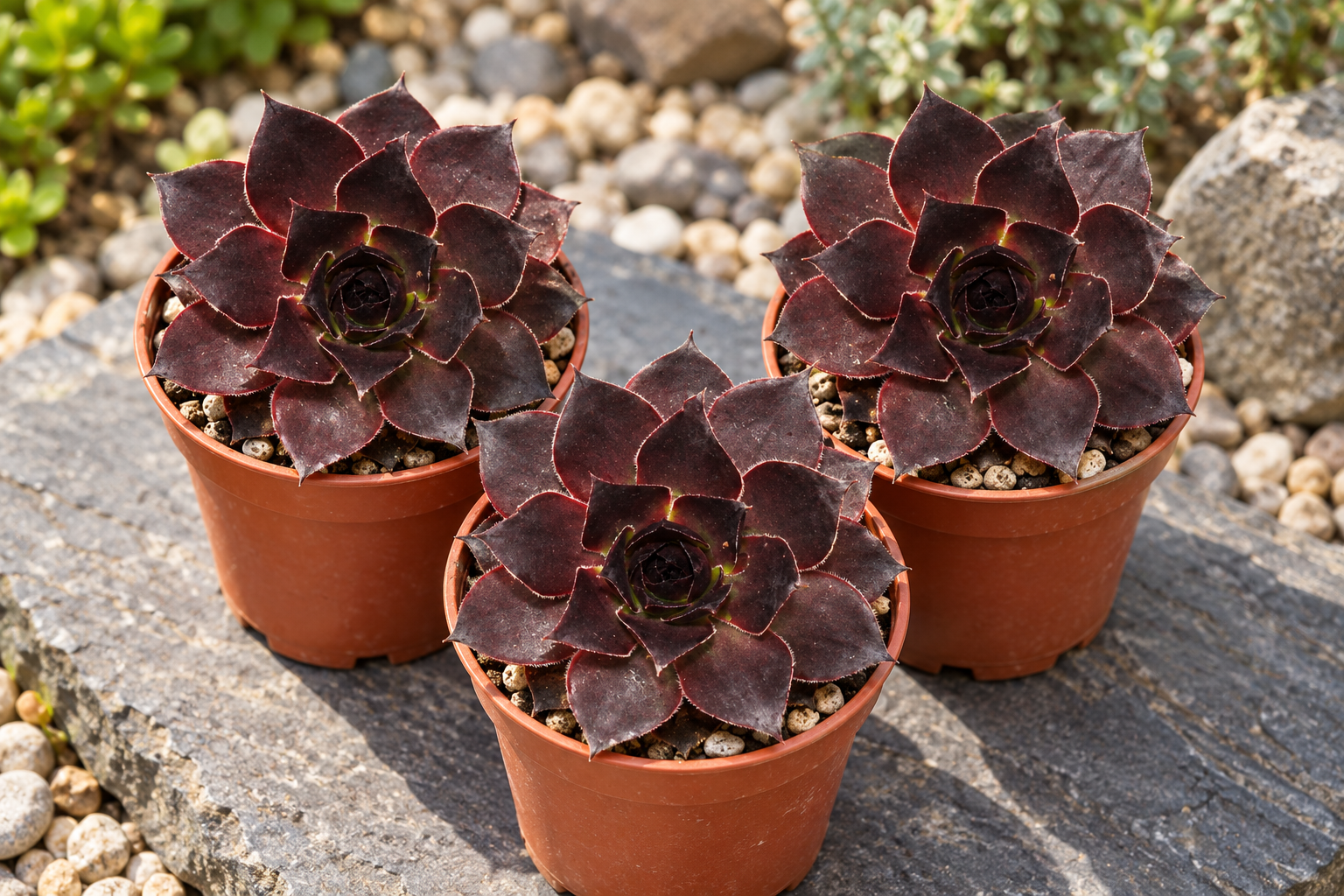
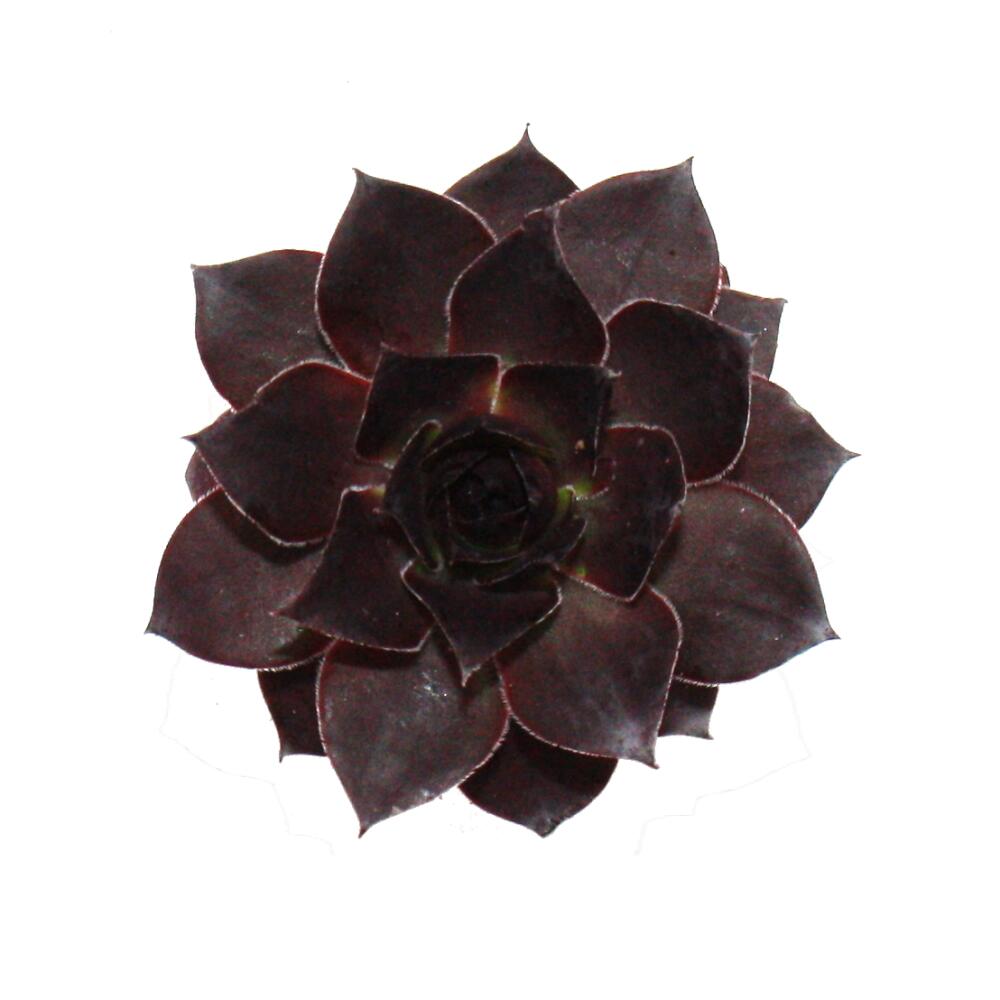
Leopold stands out through broad fleshy leaves. They form a strong rosette with a dark burgundy to purple impression; fine pale marginal hairs trace the outlines. In the clean shop original, the centre is especially dark while some outer surfaces shimmer more lightly. Sempervivum Leopold is a named houseleek variety in Crassulaceae. First-hand descriptions by Volkmar Schara and Erwin Geiger emphasise strikingly broad leaves and later large rosettes. A dark spring appearance may look more purple in summer or slightly redder at the centre. Even this comparatively dark selection has no identical colour at every site. The clear broad leaf shape is part of its appeal. A healthy firm centre and new side heads deserve more attention than attempting to make every leaf as black as possible.
Small delivered plants become much broader later
You start with three plants of the same variety, each in a 5.5 cm growing pot. The approximately 6–9 cm overall height includes the pot; it describes neither later rosette width nor a flower stem. Directly read variety descriptions record approximately 13–15 cm diameter for developed rosettes. This later width is a planning guide, not a promise for a freshly delivered head. Lift each plant from its packaging by the pot rather than using broad leaves as handles. Check moisture, secure seating and an undamaged centre. Distinguish old dry outer leaves from soft wet areas. A clear first planting where all three young heads remain individually accessible is worthwhile. Existing offsets may be small and need time to develop the larger mother rosette’s character.
Give dark heads light and space
An open sunny outdoor position suits this houseleek. In a rock garden, dark foliage contrasts with quiet pale stones; a suitable trough brings the broad surfaces close to view. A dark warm indoor shelf is no substitute for this cultivation. Do not let larger neighbours cover low rosettes, and acclimatise shipped plants gently to very hot sun. For a loose initial planting, approximately 15–20 cm between centres can serve as a guide. This comes from the documented later diameter of 13–15 cm plus some free margin, not a tested fixed variety row spacing. Plan extra room for offsets if a connected group is intended. A small delivered head may initially look lost in a large empty bowl, but a clear beginning with room to grow is preferable to filling densely at once.
Draining soil beneath the broad leaves
Plant preferably in spring when soil is frost-free and workable. Improve wet heavy soil first or choose a suitable raised site or trough. Leopold’s broad lower leaves sit close to the surface; the roots below should not remain wet for long after rain. Use an appropriate draining mix with mineral structure and keep container holes free. Place the root ball at roughly its former growing-pot level. Keep the centre clear and do not stuff soil between inner leaves. Surface grit may reduce direct contact with damp soil and display the dark rosette clearly. Beneath decorative gravel, however, a closed wet root ball remains wet. A permanent planting needs sufficient root space and accessible container openings so drainage and plant health can be checked.
Assess water demand and dark colour separately
Water the root ball gently after planting and let excess drain. Subsequently, soil moisture, weather and developmental stage determine another application. A small growing pot can dry quickly in summer sun even if thick leaves bridge dry spells. This calls for specific checks, not a daily calendar. Dark colour alone says little about root moisture. Do not immediately respond to pale new leaves with lots of feed; first inspect light, firm growth and the root ball. Soft dark areas require a different response from naturally purple firm leaves. Garden planting usually needs no special feeding. Feed long-used containers sparingly during growth if needed, according to the label. Normally add no extra water in a rainy winter, but continue observing actual moisture beneath rain protection. Always avoid standing water under the container.
Offsets carry on after flowering
Even a large Leopold rosette does not last indefinitely. Houseleeks may form a flower stem from a mature centre in summer; that individual head then dies. The first-hand variety description reports rather moderate flowering, so dark rosettes remain the portrait’s focus. No flowers or particular flower colour are promised for the young delivery. Existing lateral offsets can occupy the space. Later remove dry flower remains and dead material carefully without pulling healthy neighbouring heads out. Well-developed offsets can be detached and rooted separately in spring. For rootless heads, initially provide a draining surface, protection from strong direct sun and observed rooting. Place securely established plants in their final sunny position only afterwards. Offsets continue the existing selection; seed is not a reliable route to identically appearing Leopold plants.
Avoid winter wet beneath the large rosette
During long rainy periods, check especially the base beneath broad outer leaves. Water must leave both container and planting site. In excessive winter moisture, move exposed pots beneath bright airy protection which keeps rain off while allowing circulation. A tight plastic covering or a warm dark room is no replacement. If a rosette sits loosely or softens quickly, inspect root ball and roots gently; dark leaf colour alone cannot identify the cause. Fill gaps in older groups with healthy offsets, divide overcrowded containers in spring and remove dry dead material. Do not let new small rosettes disappear beneath large heads. Leopold’s later width especially calls for an observed planting in which individual heads have room and remain readily accessible.
One plant, several views
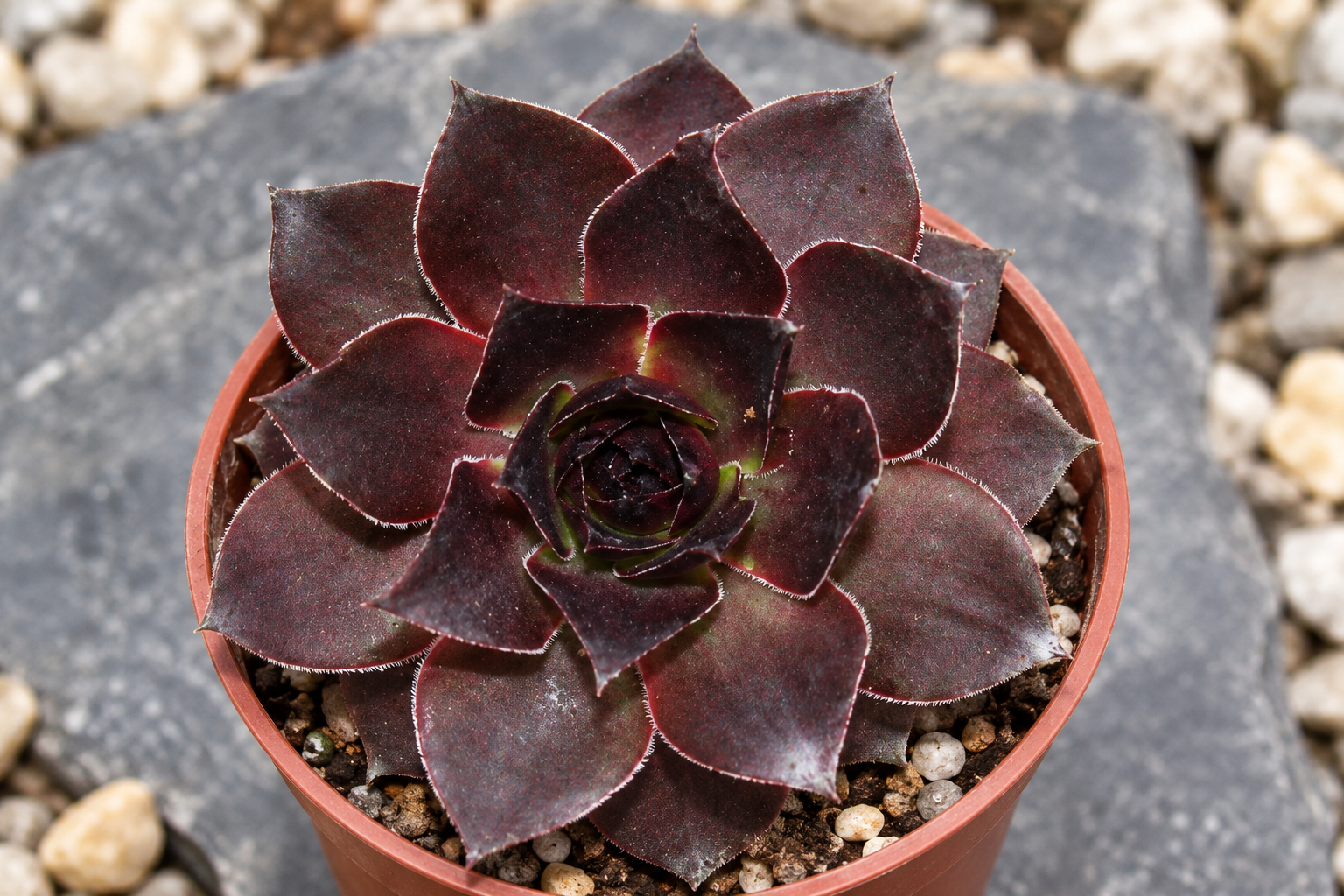
Good to know
Will Leopold be as wide as its delivery pot?
A developed rosette may reach approximately 13–15 cm diameter. The current pot is 5.5 cm; young delivery size and later growth are different.
Does Leopold always stay this dark?
The variety is described as dark, but light, season and development change its appearance. Distinguish firm purple leaves from soft damaged areas.
How much spacing do young heads need?
Approximately 15–20 cm between centres is an initial guide derived from later width. Leave extra room for offsets; it is not a tested fixed variety row spacing.
Must I water the small pots daily?
Decide by root-ball moisture and weather. Water when needed, drain excess and check again, without a rigid calendar.
Why does a rosette die after flowering?
An individual houseleek rosette’s life ends after flowering. Healthy offsets can take its place and preserve the group.
Will seeds produce the same variety?
Seedlings may have different characteristics. Well-developed offsets are the appropriate way to continue the selection.
What should I check if a base softens in winter?
First inspect moisture, container drainage and roots. Keep excessive rain away with airy protection, rather than tight wrapping or a dark warm room.
Sources and editorial note
- Exotenherz: offer, delivery measurements and original photographs
- Craigiehall Nursery: direct Leopold variety and growing observations
- RHS: growing houseleeks in garden and containers
- NC State Extension: rosette structure and life cycle
- Sempervivum-Liste: first-hand Leopold descriptions by Volkmar Schara and Erwin Geiger
Shop offer, unchanged original photographs and directly read specialist sources compared on 4 October 2026. Young delivery size and later varietal development are described separately. Check shop availability.