This plant at Exotenherz
Check the shop offer for current availability, price and what is included.
Check the shop for the current price, availability and offer contents.
Your care table
| Topic | What to do | Why it helps |
|---|---|---|
| Light | Position very brightly; increase strong sun gradually after transport. | Large thin leaves need light but may be damaged behind hot glass. |
| Water | Water thoroughly once the surface has dried slightly; do not let the root ball dry out. | Large leaf area and strong new growth use water. |
| Drainage | Let water drain and empty the decorative pot. | Even moisture does not mean permanent wetness. |
| Compost | Use nutrient-containing, humus-rich potting compost with stable structure. | It must hold moisture and allow air to roots. |
| Feeding | Supply according to the fertiliser label during strong growth. | New leaves and shoots need nutrients; weak winter growth much less. |
| Repotting | Check the root ball in spring and move up one pot size when densely rooted. | A strong shrub gradually needs more root space. |
| Pruning | Shorten long shoots selectively in spring; wear gloves. | Pruning encourages branching; leaf hairs can irritate skin. |
| Winter | Keep bright, frost-free and preferably without hot heating air. | Less light and reduced growth call for adapted watering. |
Check the compost and pot weight. The care table explains how far the compost may dry.
Water only when needed. The water should reach the root ball without spilling over the rim.
Remove surplus water from the saucer or cachepot. Then return the plant to a suitable position.
Large leaves that need not shout
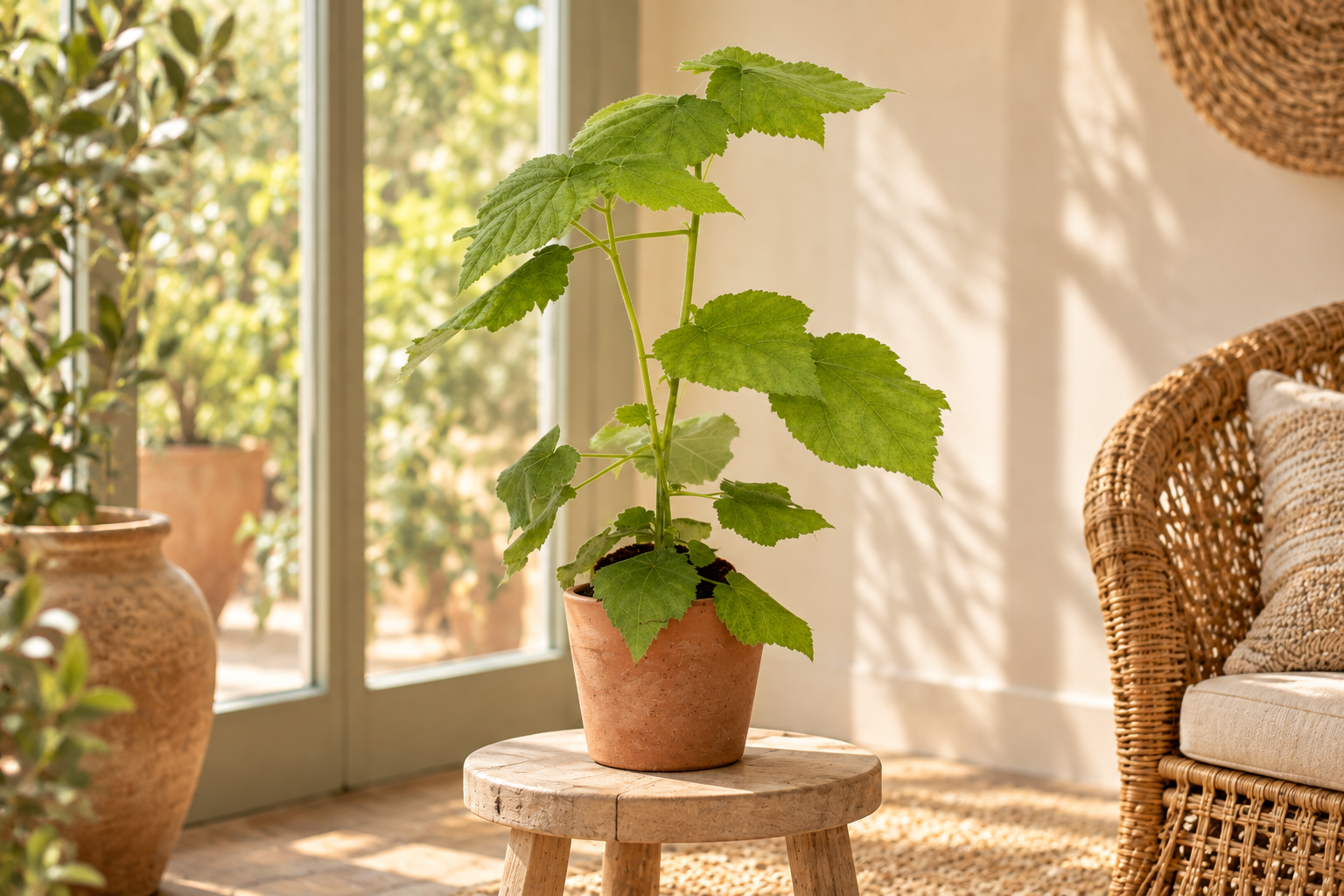
The indoor linden has a special charm: its pale foliage looks soft, while toothed edges and clearly visible veins invite a closer look. Despite its name, it is not a small version of our garden linden but a South African member of the mallow family. The shop calls it Sparmannia africana; botanically you also encounter the spelling Sparrmannia africana. The fine hairs belong to the leaf and are not wiped off. We position it where its leaves can stand freely without constantly brushing furniture as people pass.
The young plant needs a place with a future
The indoor linden is offered in a 17-cm pot at about 40 to 50 cm total height. This describes the delivered plant including its pot, not its later size. With good supplies it develops strong shoots and considerably more foliage. A narrow shelf board is therefore only temporarily suitable. Choose a stable position from which it can grow sideways and upwards. The original photograph shows its young, still loose shape. A larger mature shrub can be followed in pot cultivation through regular gentle shaping.
Combine light and air
A very bright living area or sheltered conservatory suits it if heat does not build up there. The plant should get plenty of daylight; after transport we do not increase fierce midday sun behind heated glass all at once. A light curtain may help during hot hours. Air exchange matters equally, without cold draughts directed straight at foliage. A sheltered bright outdoor spot is an option in summer after gradual acclimatisation and in suitable weather. Before cold nights the frost-sensitive indoor linden belongs back indoors.
The large leaf surfaces drink too
Feel the compost before watering and occasionally lift the inner pot. As soon as the surface has dried a little, water slowly and thoroughly. The whole root ball should receive water, after which the excess may drain. Persistent dryness is poorly suited to soft foliage; a filled decorative pot is not a good water reserve, however. In warm weather and fresh growth we check more often. If leaves droop, check moisture first: an already wet root ball does not automatically receive more water. Instead note how quickly the pot becomes lighter at the chosen position.
Care for root space and branching in time
Humus-rich nutritious potting compost with good structure helps provide even supplies. If roots densely fill the ball or water runs short very quickly despite thorough watering, a slightly larger pot is sensible in spring. Avoid unnecessarily stressing existing shoots during the move. Feed according to the label during growth and account for nutrients in freshly pre-fed compost. Long sparsely branched shoots can be shortened selectively. Work with gloves and clean tools: the fine hairs may irritate sensitive skin. Healthy shoot sections can be used for a cutting trial.
Flowers are a lovely extra
Older well-grown plants may form white flowers with striking yellow and reddish stamens. Suitable light and growing conditions are needed; a young delivered plant need not carry buds yet. The indoor linden remains an attractive foliage plant without flowering. In winter choose a bright frost-free spot and adapt supplies to slower growth. In front of a hot radiator, large leaves dry faster while the cooler root ball may still be moist. Checking both separately saves the plant unnecessary extra watering.
Interpret leaf signals calmly
Yellow leaves, dry edges and limp new growth call for observation, not a definite diagnosis. Check root-ball moisture, heat and a recent change of position together. Look beneath the leaves too: whiteflies and fine mite webs are easier to notice early than on an already weakened plant. Do not heavily prune, repot and feed strongly all at once to save every leaf. First improve the recognisable cause and observe new growth. On this large-leaved plant, good care becomes visible particularly when fresh foliage grows healthily and evenly.
One plant, several views
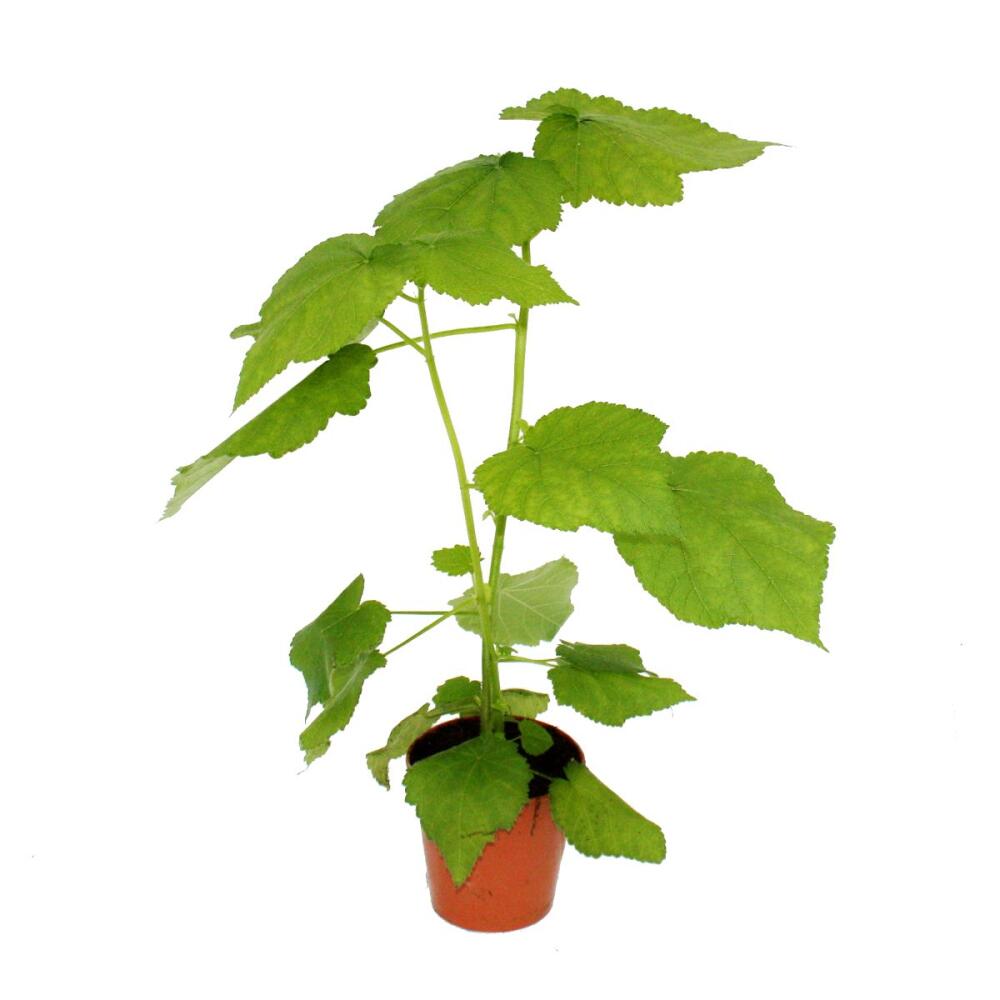
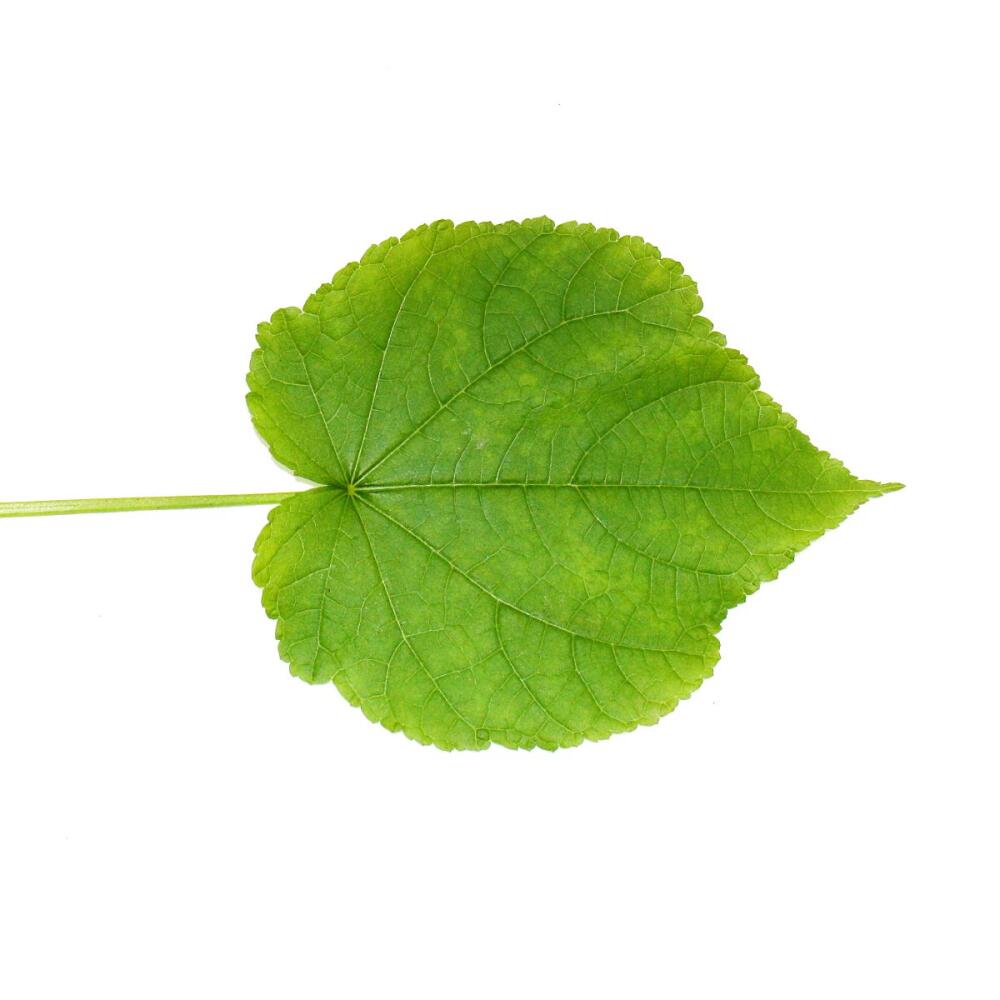
Good to know
Is the indoor linden a garden linden?
No. It belongs to the mallow family and is kept frost-free here as a potted or conservatory plant.
Does it stay 40 to 50 cm tall?
That is delivery height including the pot. With suitable care it keeps growing and increasingly needs space.
Why do its leaves droop?
Check moisture and warmth first. A dry root ball and a damaged root in wet soil need different measures.
Should I wipe off the soft hairs?
No. They belong to the leaf. Rubbing damages foliage; wear gloves when pruning.
Does the young plant flower immediately?
Not necessarily. Flowers depend on development stage, light and cultivation and are not guaranteed by the photograph.
May it stand outdoors in summer?
In warm weather at a sheltered spot after slow light acclimatisation. Bring back inside before cold nights.
Sources and editorial note
- Exotenherz: offer and original photographs (02.10.2026)
- RHS: Sparrmannia africana (02.10.2026)
- NC State Extension: African hemp (02.10.2026)
- RHS: leaf problems in houseplants (02.10.2026)
Shop offer, product number, GTIN, availability and original images checked directly on 02.10.2026. Specialist sources read directly. Shop name Sparmannia; botanical spelling Sparrmannia explained. Differing source descriptions of leaf retention not transferred as a fixed winter-foliage promise. Image without guaranteed flowering.