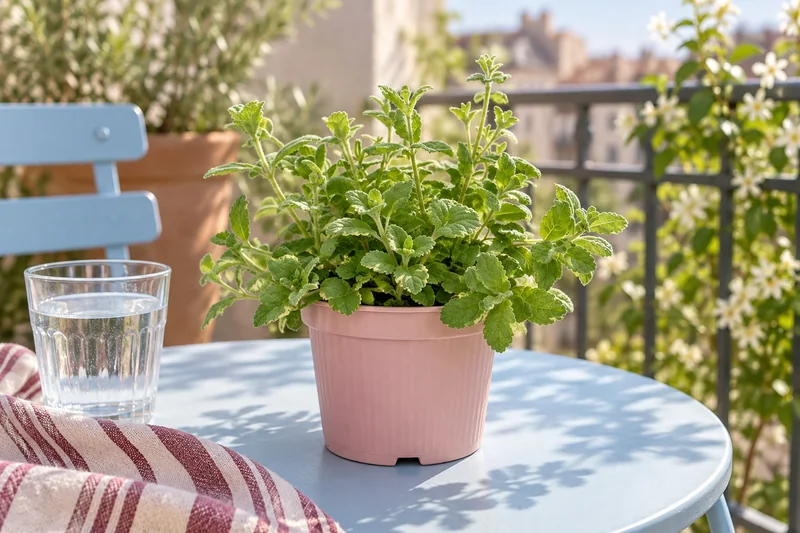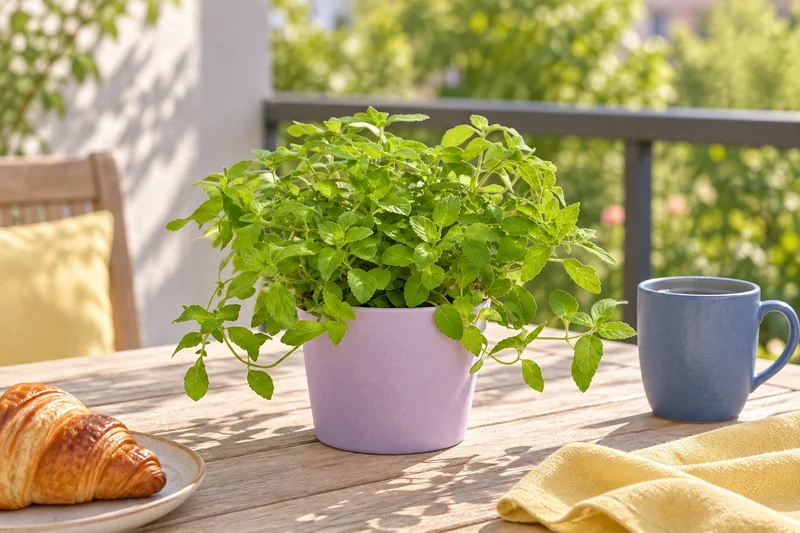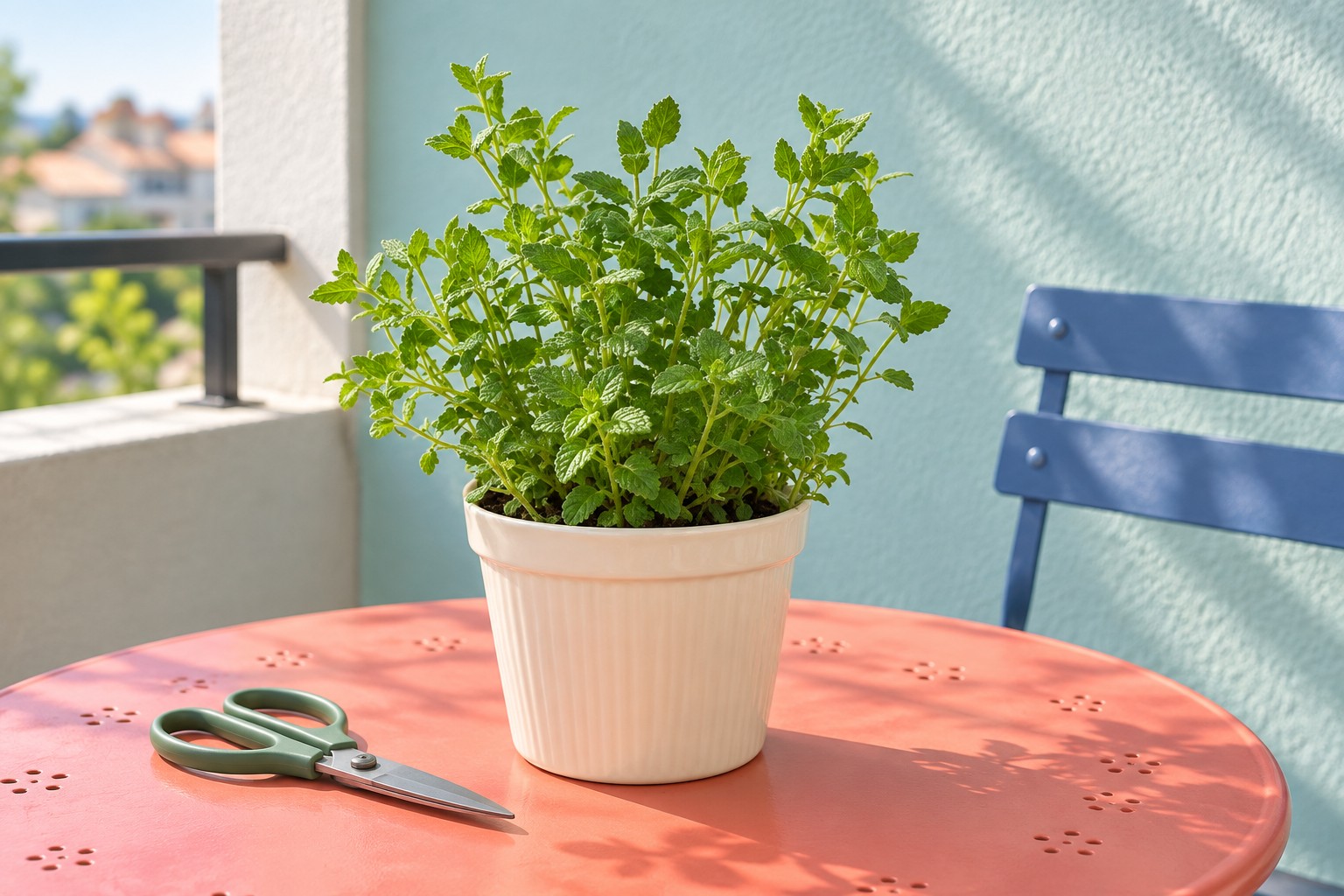
This plant at Exotenherz
Check the shop offer for current availability, price and what is included.
Check the shop for the price, current availability and what is included.
Your care table
| Topic | What to do | Why it helps |
|---|---|---|
| Light | Sun to partial shade, with some protection when the pot heats up. | Light and water consumption must be balanced. |
| Water | Check the root ball regularly and supply evenly. | Small herb pots dry quickly in warmth. |
| Soil | Loose nutrient-containing soil with good drainage. | Mint likes moisture but not standing wetness. |
| Harvest | Cut shoot tips above a leaf pair. | This supports branching growth. |
| Fertiliser | Moderately during growth and harvesting according to the label. | Repeated new shoots use nutrients. |
| Runners | Keep separately in a pot where space is limited. | Mint can spread in a bed. |
| Winter | Position small pots sheltered and guard against drying. | Hardiness in a bed does not protect a free-standing miniature root ball. |
| Checks | Check leaves for spots and rusty pustules. | Harvest only healthy clean foliage. |
Check the compost and pot weight. The care table explains how far the compost may dry.
Water only when needed. The water should reach the root ball without spilling over the rim.
Remove surplus water from the saucer or cachepot. Then return the plant to a suitable position.
A scent name, not a strawberry plant
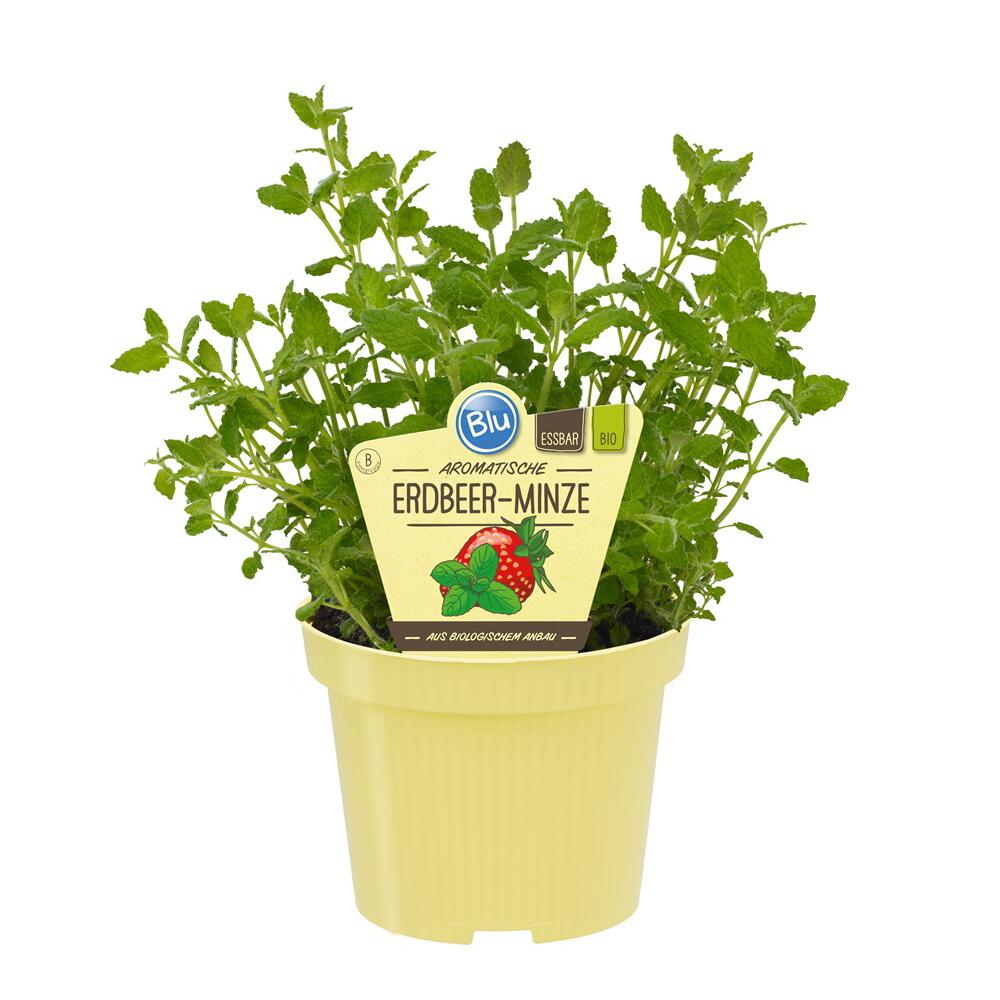
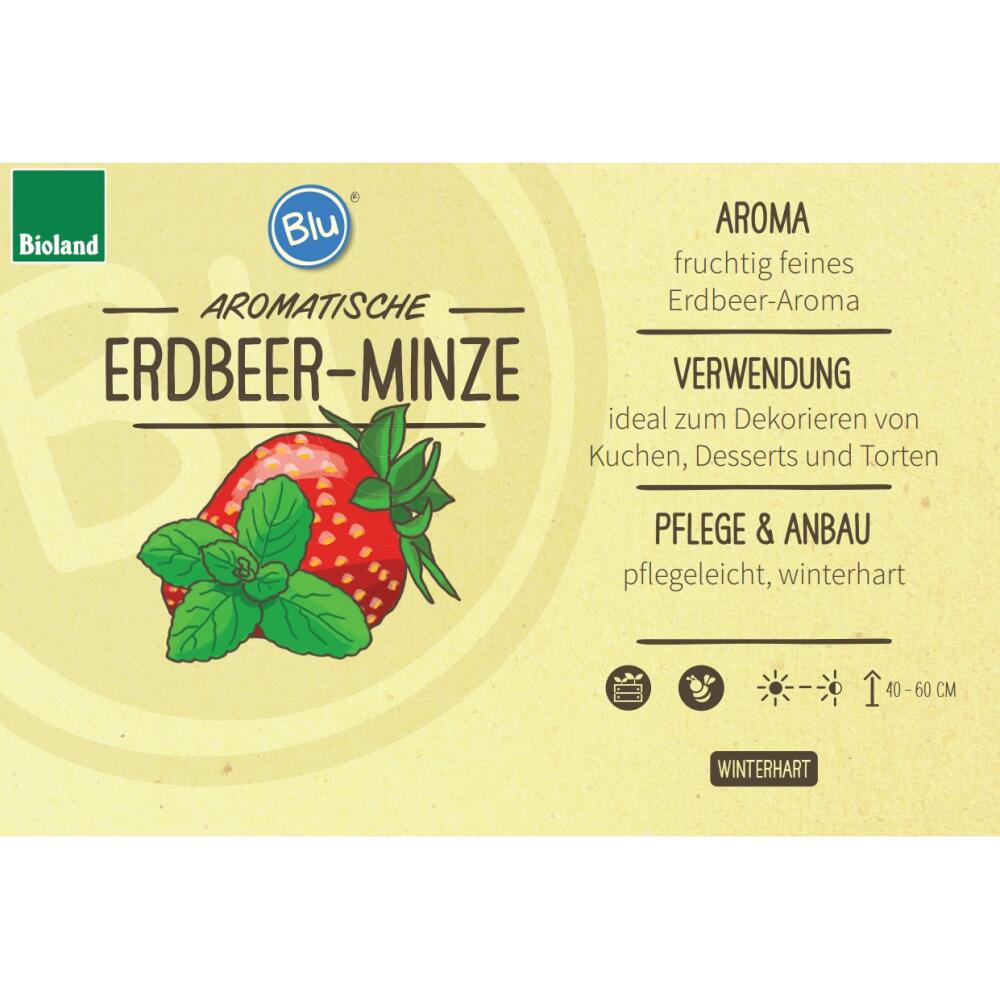
Gently rubbing the small leaves releases the fruity aroma of strawberry mint. How clearly one recognises strawberry in it is individual and also depends on foliage development. The plant does not produce strawberries and is not a cross with a strawberry plant. The supplier botanically lists it only as Mentha species. We therefore keep to the confirmed genus rather than adding an unsupported species. As a mint, it belongs to the Lamiaceae family.
The 12 cm pot starts the herb season
The offered plant grows in a 12 cm pot; no binding delivery height is given. Approximately 40 to 60 cm in the description refers to later growth. A young compact specimen looks smaller accordingly. For longer balcony cultivation, a sufficiently large container with free drainage is worthwhile after settling in. Mint can spread in a bed. Anyone keeping several aroma forms beside one another should label them and give them separate pots so the plantings remain manageable.
Light and moisture must be balanced
Sun to partial shade suit it well. Water demand rises sharply in a very hot small balcony pot; a position with some afternoon shade can be easier there. Use loose nutrient-containing herb or potting soil that retains moisture yet allows water to drain. Mint is not a drought-loving rock-garden plant like some Mediterranean herbs. If shoots become limp at midday, check the root ball. With moist soil, heat protection may initially be more important than further watering.
Harvesting keeps the planting active
Cut healthy shoot tips above a leaf pair rather than constantly plucking only individual lower leaves. This lets the plant branch anew. Leave enough green foliage for recovery. For drinks or desserts, briefly rinse fresh clean leaves and use sparingly to taste. A small addition to fruit, quark or a cool drink is often enough to discover one's aroma preference. Use the securely identified plant offered as edible, not a similar-looking unknown wild plant.
Water, nutrients and renewal in a pot
Water as needed and do not let the root ball repeatedly dry completely. Remove remaining water from an outer pot. During strong growth and regular harvesting, feed moderately according to the label; initially hold back in fresh pre-fertilised soil. A dense old root ball can be rejuvenated by division and fresh soil. Use healthy rooted pieces and care for them carefully after planting. Shoots rooted near the ground and runners also need checking before they conquer neighbouring containers.
Winter rest and healthy new foliage
Strawberry mint is offered as perennial and winter-hardy. Soil in a bed protects the root zone better than a small free-standing pot. Position containers sheltered in winter, insulate the root ball if needed and check for dryness on frost-free days. Dead above-ground shoots in winter rest do not automatically mean the plant is lost. Cut back in spring and wait for new shoots. Rust-coloured pustules or spotted foliage during the season call for checking; do not use affected material as a fresh kitchen ingredient.
One plant, several views
Good to know
Do strawberries grow on strawberry mint?
No. The name describes the perceived scent note of the leaves.
Is the plant already 60 cm tall on delivery?
Delivery height is not given. The 40 to 60 cm describes possible later growth.
Can I keep it permanently in the small sale pot?
For a while, yes; strong longer cultivation, however, requires more room and fresh soil for the growing roots.
Has it died in winter when shoots turn brown?
Above-ground dieback can belong to winter dormancy. What matters is a healthy root zone able to shoot again in spring.
Sources and editorial note
- Product and delivery contents: Exotenherz
- Blu nursery: range and growing information
- Royal Horticultural Society: plant and care information
Sources checked: 15 September 2026. Product information and the contents of delivery follow the linked shop offer. Care advice was checked against the cited specialist sources and should still be adapted to the plant’s condition, position and season.