This plant at Exotenherz
Check the shop offer for current availability, price and what is included.
Product and delivery details are given in the individual offer.
Your care table
| Topic | What to do | Why it helps |
|---|---|---|
| Sun | Choose a sunny border edge or open container. | The low crown should receive enough light. |
| Soil | Keep very well drained and rather lean. | Winter wetness threatens cushions. |
| Spacing | Plan roughly 20–30 cm as a starting point. | Root balls should grow together later. |
| Establishment | Supply freshly planted root balls as needed. | Drought tolerance requires rooting in. |
| Pot | Check the small soil volume separately in heat. | A rock-garden image does not ban watering. |
| Pruning | Trim lightly in green areas after flowering. | Do not routinely cut bare old sections hard. |
| Winter | Avoid wet leaf layers and standing water. | Air and drainage support low growth. |
| Nutrients | No strong extra supply out of habit. | Consider existing soil and growth. |
Check the compost and pot weight. The care table explains how far the compost may dry.
Water only when needed. The water should reach the root ball without spilling over the rim.
Remove surplus water from the saucer or cachepot. Then return the plant to a suitable position.
The edge gains colour between small leaves
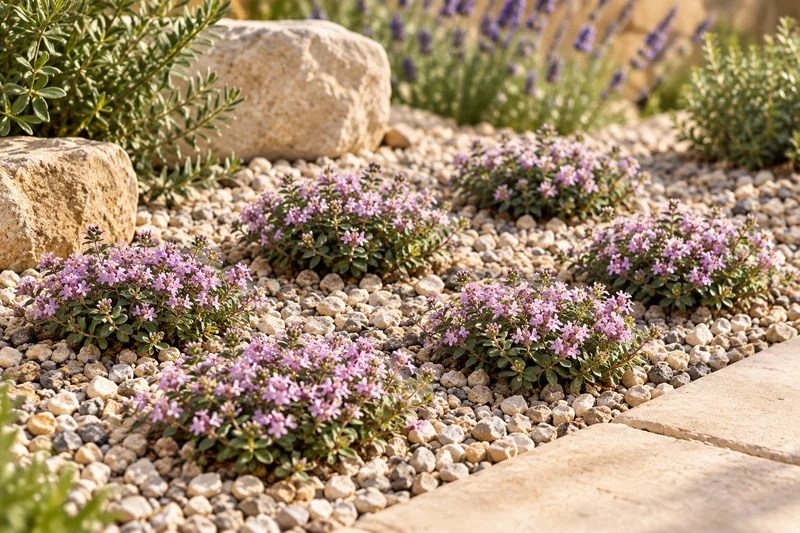
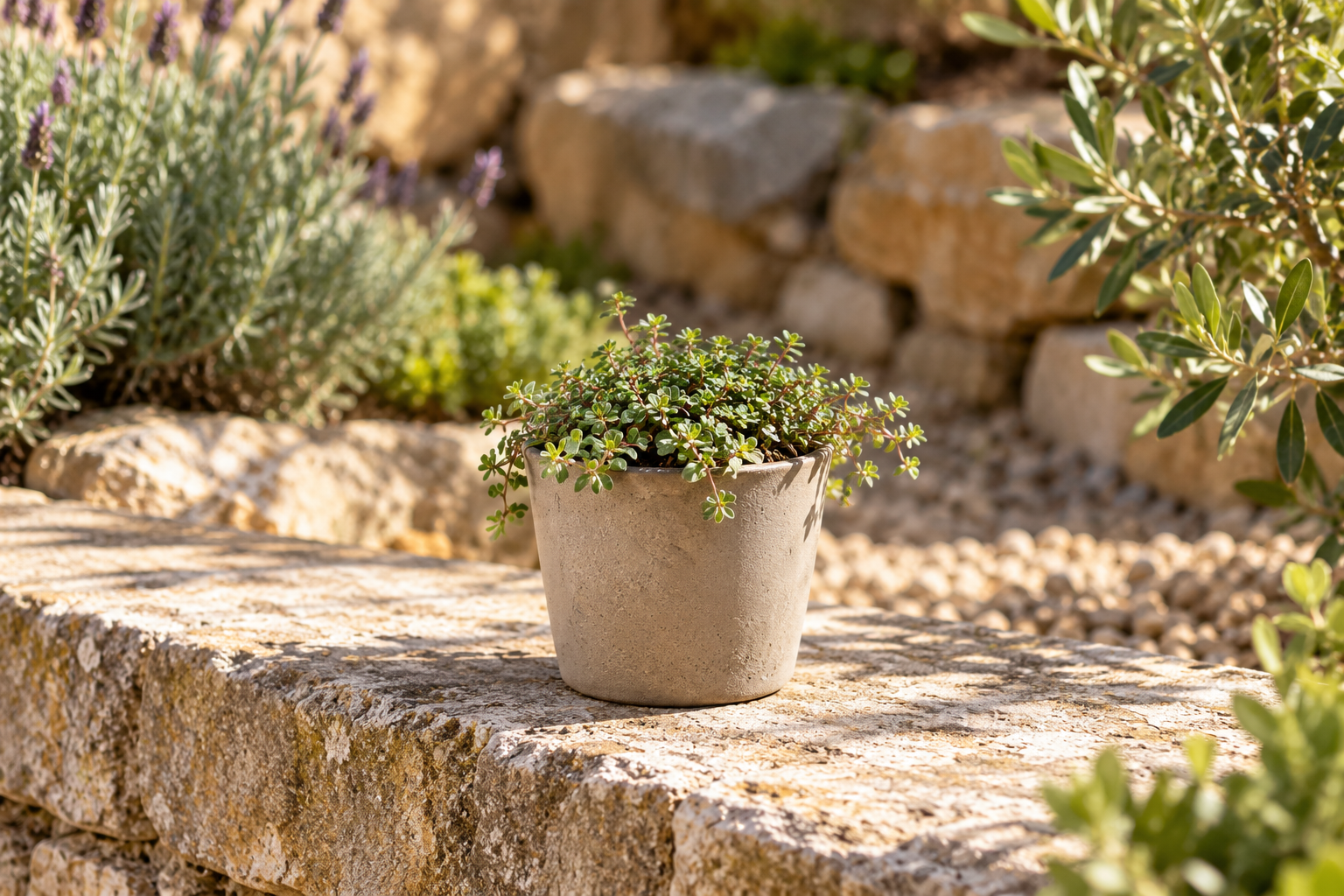
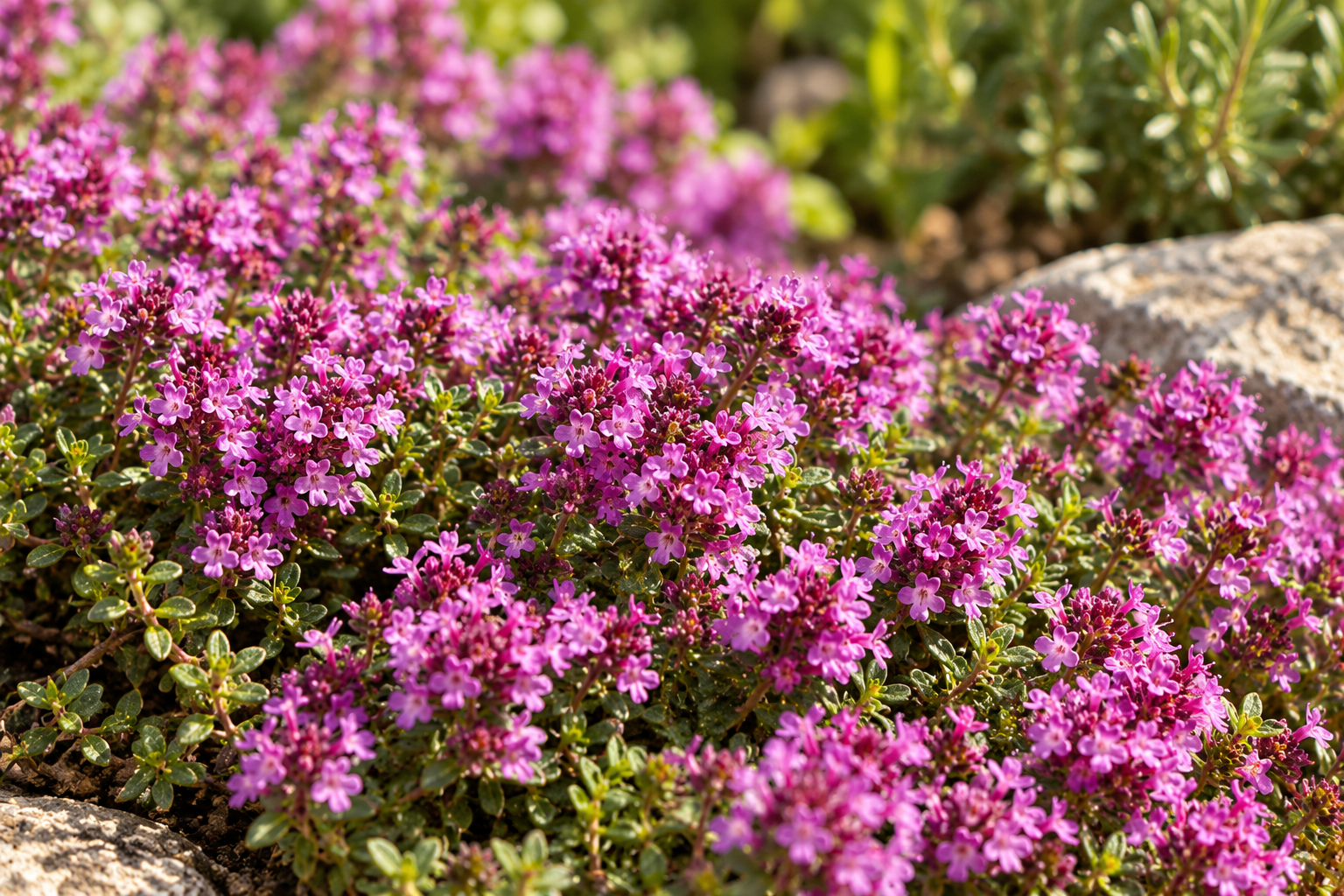
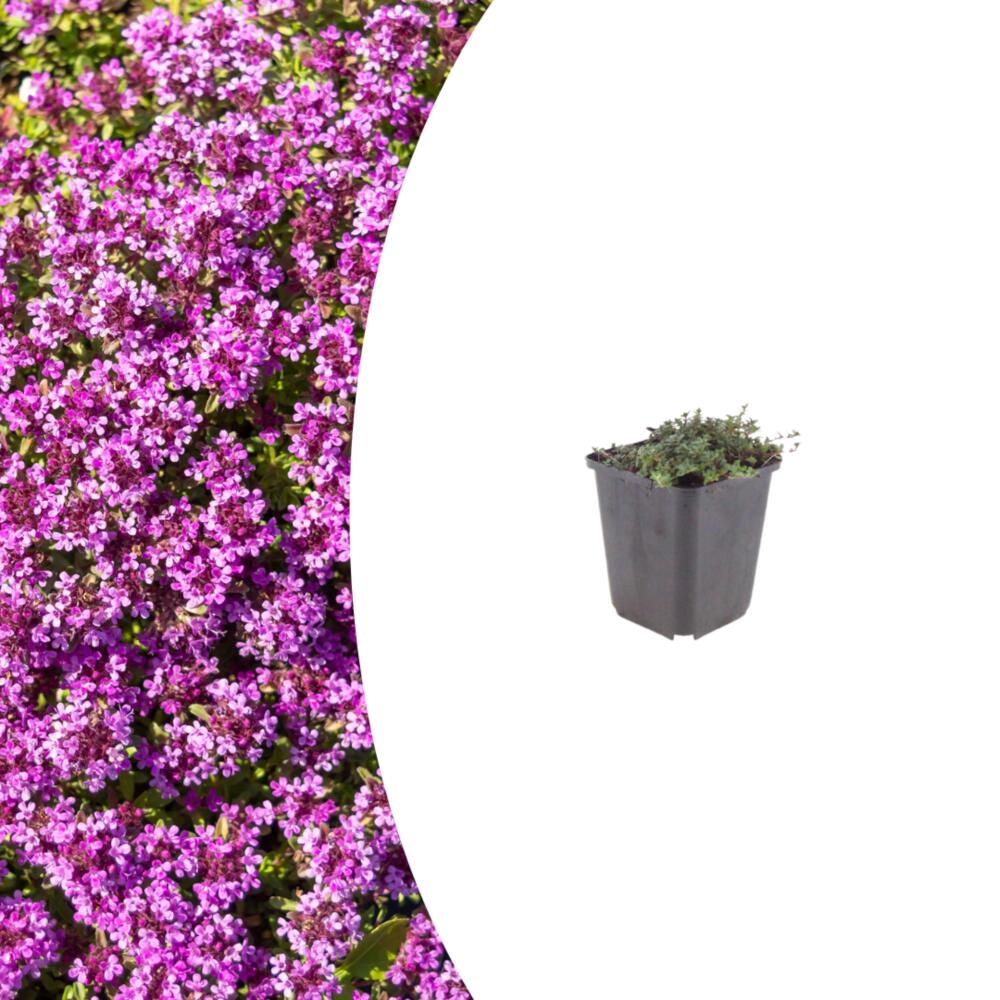
Coccineus begins as a low green plant with very small leaves. Later, densely placed strong pink to carmine-red flowers can cover the carpet. This change stands out beside gravel, a dry wall or a narrow border edge. The young-plant scene and enlarged later flower idea show different developmental stages. They do not promise delivery plants arriving as a closed flowering carpet. The desired area grows from several small root balls only over time.
Set size determines planning, not the individual species
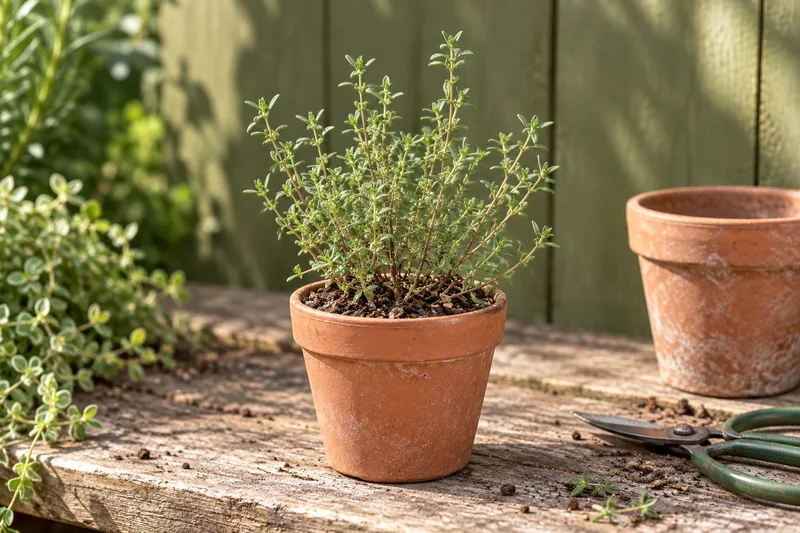
The assortment has quantity sets of six, twelve, twenty-four, forty-eight and sixty plants. Their child articles remain separately assigned. Each nursery pot has the described 9-cm reference; stated total height is not botanical carpet height without container. Lay root balls out on the area before planting. Roughly twenty to thirty centimetres spacing helps orientation. For a narrow band, a loose line may make more sense than pushing the whole set closely into a small box.
The sunny area needs rapid drainage
A bright sunny position and very well-drained soil form the foundation. Low cushions should not sit in a wet hollow after rain. In a container, choose drainage holes and a suitable permeable mix. Plant small root balls at their previous height and settle soil gently. A decorative top layer of gravel alone does not make very heavy ground suitable. Check whether water can drain in the actual root zone. Later carpet effect follows good starting conditions, not planting as deep as possible.
The carpet becomes drought-tolerant only after establishment
Check newly planted root balls during establishment and supply as needed. Established thyme later copes better with drier periods. A small pot beside hot stone still needs its own attention. Lift a shoot carefully so the root-ball centre stays reachable. Avoid excess winter wetness. Moist leaves left between plants can be removed. This keeps low growth airy without forcefully tearing fine shoots apart during every check.
After flowering, maintain only the green form
A light cut after flowering can keep the area more even. Cut within leafy growth and preserve healthy green sections. A strong cut into old bare wood is no necessary annual duty. Abundant extra fertiliser does not automatically beautify a low sunny carpet. Observe existing soil and growth first. Mark individual gaps in the plant book; this shows whether wetness, shade or a not-yet-established plant makes the difference there.
The spring-thyme name does not replace a flowering calendar
The shop title calls it spring thyme while the specialist description places this Coccineus group’s flowers in summer. Exact onset shifts with cultivation and weather. The international thyme registrar treats Coccineus as a group; historical species assignments are not identical everywhere. The shop name remains findable here and the specialist name is explained in addition. The particular low carmine form matters for garden planning. Observing the first flowering day is more useful than a rigid promise for a particular spring month.
One plant, several views
Good to know
Are set quantities separate plant species?
No. Quantities have their own child articles but refer to the same Coccineus selection.
Is the flower photograph the delivery condition?
The flowering close-up shows possible later development, not the contents of one shipping pot.
When does spring thyme flower?
Summer flowering is mainly described for Coccineus; position and weather change onset.
How closely do I plant?
Roughly 20–30 cm provides guidance; consider area and desired development.
Must I cut into old wood?
No. Keep light shaping within healthy leafy areas.
Sources and editorial note
- Exotenherz: offer and original photographs (03.10.2026)
- RHS Plants – Coccineus Group, flowering, size and spacing (03.10.2026)
- Thymus ICRA – Coccineus Group and historical names (03.10.2026)
- RHS – thyme, establishment and careful pruning (03.10.2026)
Shop offer, article number, GTIN, availability and original photographs checked directly on 02.10.2026; specialist acceptance 03.10.2026. Specialist sources read directly. SKU, pot reference, original photographs and orderability checked in the shop on 03.10.2026. Delivery height and species development separated. Specialist sources actually read; six individual text sections, eight care points and five FAQs editorially compared. Currently not orderable: knowledge portrait without a purchase link or social sending approval. No tool, Wawi or server changes. Currently not orderable: knowledge portrait without a purchase link; social drafts not released for sending.