This plant at Exotenherz
Check the shop offer for current availability, price and what is included.
Product and delivery details are given in the individual offer.
Your care table
| Topic | What to do | Why it helps |
|---|---|---|
| Graft | Keep the yellow stem and green base together as one connected plant. | The yellow garden form cannot supply itself like a fully green cactus on its own roots. |
| Light | Choose very bright filtered light; avoid suddenly hot direct sunshine. | The coloured stem and green rootstock should remain healthy without sunburn. |
| Watering | After the root ball dries, water when needed and allow to drain completely. | Constant wetness damages roots; at the same time, the rootstock must not dry out severely without observation. |
| Compost | Use free-draining cactus compost and a small pot with a drainage hole. | The root ball remains easy to check and dries between waterings. |
| Monitoring | Occasionally check the green base and graft for firmness and changes. | Damage to the supplying rootstock can also affect the yellow upper part. |
| Shoots | Carefully remove the rootstock’s own side shoots if needed without damaging the connection. | Strong rootstock shoots compete with the grafted upper part. |
| Fertiliser | During active growth, feed sparingly according to the cactus fertiliser label; pause while resting. | The green base also needs nutrients, but overfeeding does not replace light. |
| Winter | Keep bright, frost-free and at least within the supplier’s stated 10–12 °C range, reducing water according to need. | The whole grafted plant does not tolerate an indiscriminately adopted cold species overwintering regime. |
Check the compost and pot weight. The care table explains how far the compost may dry.
Water only when needed. The water should reach the root ball without spilling over the rim.
Remove surplus water from the saucer or cachepot. Then return the plant to a suitable position.
Yellow fingers above a green cactus base
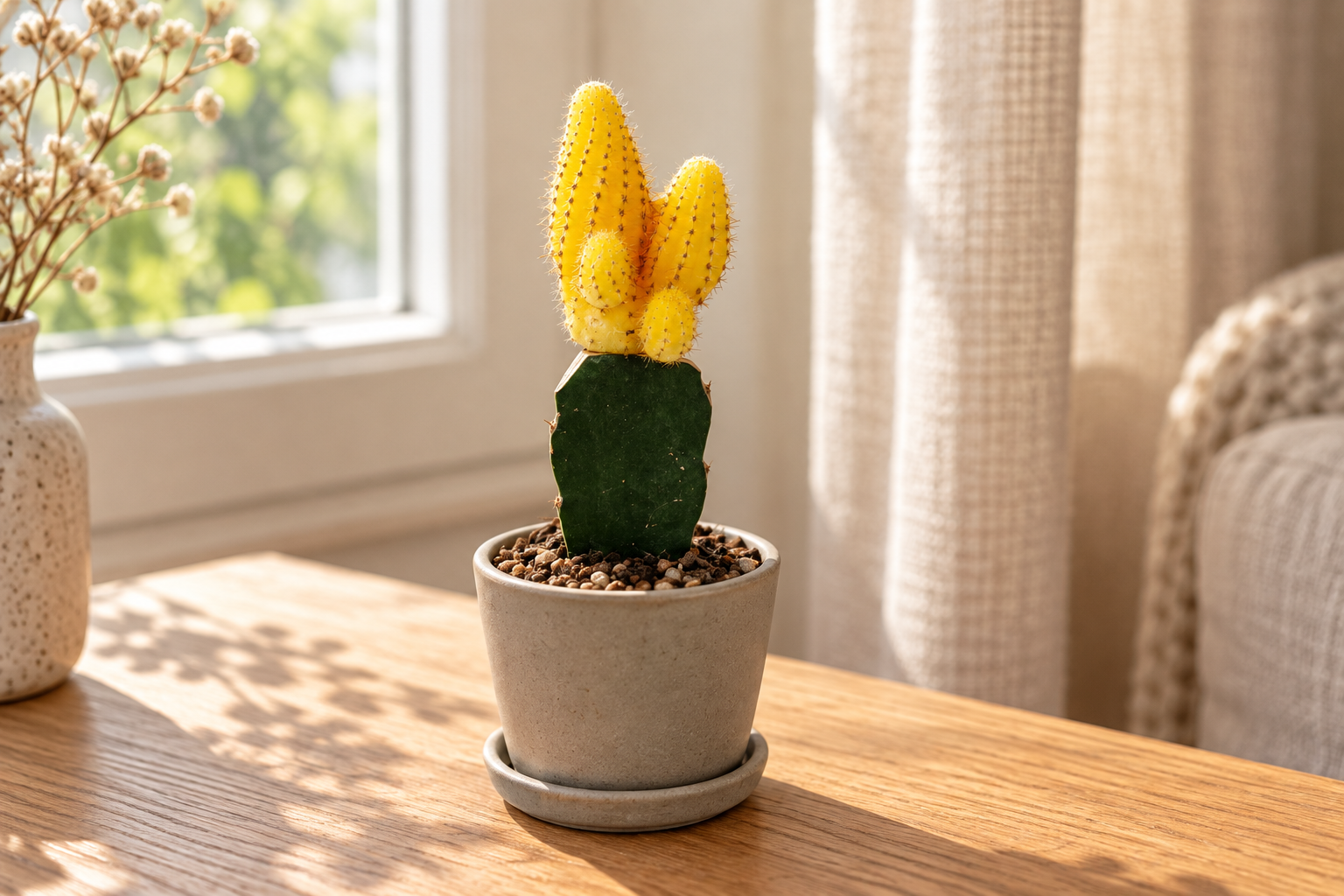
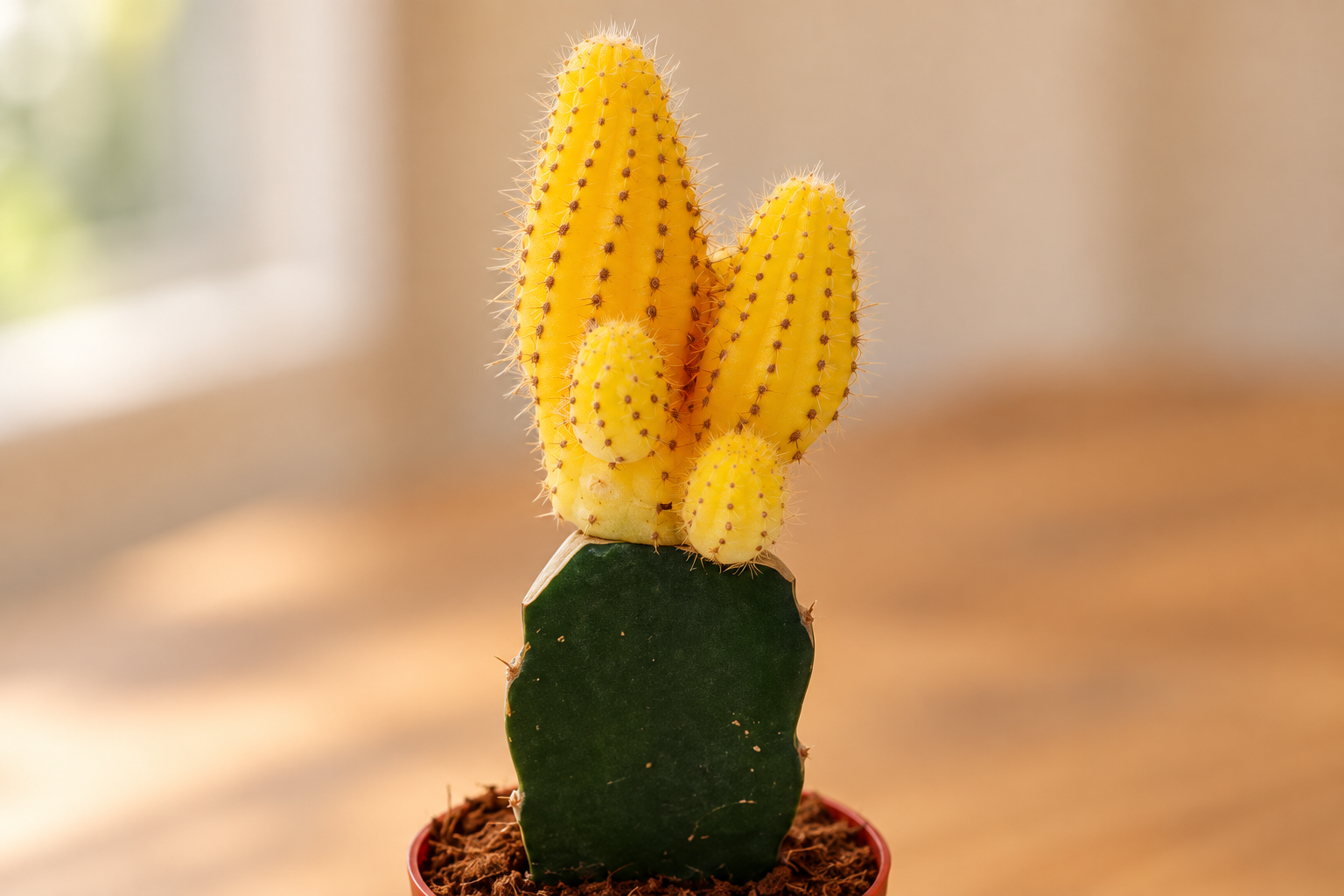
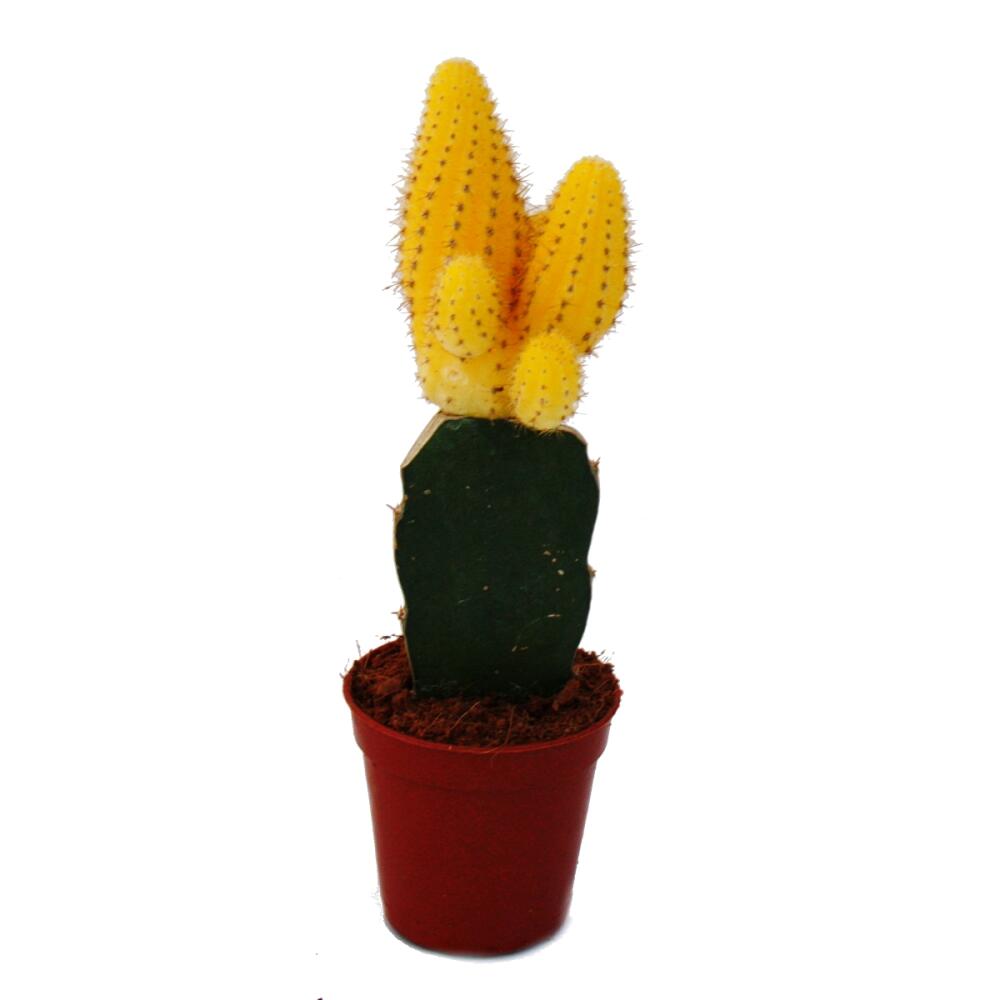
This small cactus first draws attention through its structure. Several elongated yellow stems stand above, ribbed and finely bristled. A larger finger is accompanied by shorter side pieces, making the name banana cactus suit the outline well. Below sits a clearly differently shaped green angular base. The boundary between them is visible: two cactus parts have been joined here. The yellow areas are not flowers, fruits or added decoration. They are living stems of a coloured garden form. The shop original shows one young grafted plant in a small nursery pot. Its appeal lies in the contrast between the bright upper structure and the calmer darker green below. A bright plant position where the connection is also visible makes this feature particularly clear.
The name Chamaecereus and the role of grafting
Chamaecereus silvestrii is a botanical name for the same species also listed today as Echinopsis chamaecereus. The original green species comes from northwestern Argentina and forms branched ribbed stems. The yellow garden form shown here is grown grafted. Yellow forms with greatly reduced or absent chlorophyll are documented in specialist literature; supply through a green rootstock is crucial to their survival. This culture therefore differs from a green banana cactus on its own roots. Upper and lower parts are cared for together even though they look different. The potted plant is not a new wild species, and no separate origin is inferred here from its yellow colour. For everyday care, the simple reminder is that the striking yellow stems need a healthy green base.
Gently settling the small delivery plant
The own offer states a 5.5-cm pot and about 8–10 cm total height. This size reference describes the whole young grafted plant, not only the yellow upper part. When unpacking, hold the container and avoid sideways pressure on stems and connection. A graft is not a handhold. Initially place the plant somewhere bright and sheltered, check the root ball and remove any water from an outer pot. An already moist root ball needs no extra welcome watering. For a later container, reliable drainage matters more than lots of additional room. A small stable pot is easy to observe. If a decorative outer pot is used, it stays empty after watering. Do not plant the yellow upper structure more deeply to hide the visible connection.
Bright light that suits both plant parts
Choose a very bright position with preferably filtered light. A bright east-facing window or another suitably protected window position can work. Avoid sudden hot midday sunshine, especially immediately after shipping. The yellow surface has different capabilities from a fully green cactus, and the rootstock should also continue working without sunburn. Observe firmness and new development rather than putting the plant in a dark corner to intensify the appearance of its colour. Supply through the green part becomes poorer there. Larger changes of position happen gradually. A cold windowsill or winter draught can be unsuitable despite enough light. Care follows this connected potted plant; an outdoor hardiness figure for the green species is not a suitable benchmark for its yellow grafted structure.
Water follows the root ball, not a calendar
Water supply runs through the roots of the green rootstock. Check soil and pot weight before watering. If the root ball has dried and the plant is active, water evenly; excess drains completely. A small root ball responds rapidly to warmth but can stay moist a long time in a cool room. There is therefore no fixed weekday for the next watering. Constant wetness is no more sensible than unobserved severe drying over a long warm growing period. Look at the green base as well. If it becomes soft or discoloured at its base, check moisture, drainage and roots. Not every problem of the yellow part is located at the top. A damaged rootstock can weaken the whole structure. The plant needs no regular shower over stems and graft.
Preserving the rootstock and distinguishing side shoots
Free-draining cactus compost supports alternating watering and drying. When roots actually fill the pot, careful repotting to a suitably larger size is possible in spring; healthy parts are not pulled apart. Occasionally check whether the green rootstock forms strong side shoots of its own. These shoots can compete with the grafted yellow part and, if needed, are carefully removed with clean tools without damaging the connection. Small new yellow side stems on the upper part, by contrast, belong to its branched structure. Simply removing a yellow stem and planting it like an ordinary green cutting is not a suitable propagation method here. A new graft requires experience and suitable living rootstock. For normal care, preserving the existing connection and feeding sparingly according to the label during active growth is enough.
A winter for the whole grafted plant
This grafted plant is overwintered in bright frost-free conditions. The supplier states at least 10–12 °C, so a cold cactus space used for some own-root species is not adopted without checking. With less light and quiet growth, water less and pause fertiliser. Here too, the root ball’s condition decides, not a fixed water ban lasting months. Keep clear of cold windowpanes and occasionally inspect the graft for unusual dark soft changes. A firm dry pale cut edge is assessed differently from a spreading soft area. Mealybugs can hide in stem angles; the fine regularly arranged bristles themselves belong to the cactus. As light and activity increase, slowly adapt care inputs again. Attention thus remains on healthy cooperation between yellow stem and green base.
One plant, several views
Good to know
Is the yellow part a flower?
No. These are elongated ribbed stems of the yellow garden form, with fine bristles and side branching.
Why does the yellow part sit on a green cactus?
The green rootstock supplies the yellow stems. Both form one grafted plant and remain connected.
How large is the offered plant?
According to supplier, a 5.5 cm pot diameter and about 8–10 cm total height of the young grafted plant.
Can I root a yellow stem as a cutting?
For this form, that is not a suitable ordinary cutting method. The yellow part needs supply from living green rootstock.
What should I do with a new green side shoot?
If the rootstock grows strongly, its shoot can compete with the yellow part. Carefully remove it if needed without damaging the graft connection.
Can it overwinter cold and completely dry?
Not as a blanket rule. At least 10–12 °C is stated for this specific offer. Keep bright and frost-free, watering less but according to root-ball condition.
Sources and editorial note
- Exotenherz: complete own offer and original gallery
- Kew Plants of the World Online: Echinopsis chamaecereus and synonyms
- RHS: Chamaecereus silvestrii, profile of the original green species
- Téllez-Román et al., Agrociencia 2020: yellow Echinopsis chamaecereus form and graft supply
- NC State Extension: practical graft care illustrated by the different-species Moon Cactus
- RHS: complete growing guide for indoor cacti and succulents
Sources compared: 4 October 2026. Entire own offer and unchanged original checked. Kew/RHS document Echinopsis chamaecereus or Chamaecereus silvestrii; the original Agrociencia study documents the yellow garden form requiring grafting. No ancestry link between the shop specimen and the studied laboratory stock is assigned. NC State serves as a graft-care principle, not species evidence for Chamaecereus.